

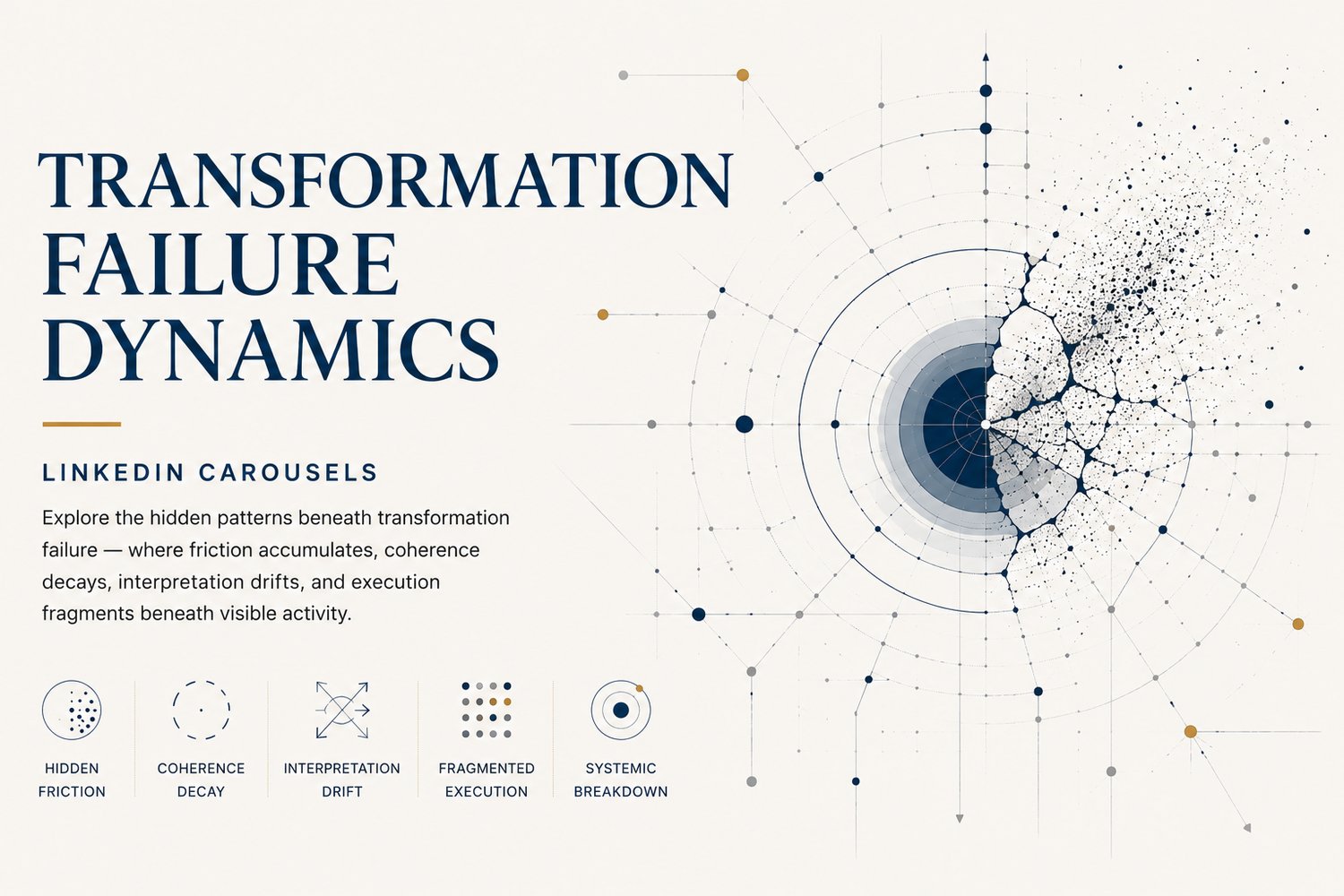
Illusion of Progress
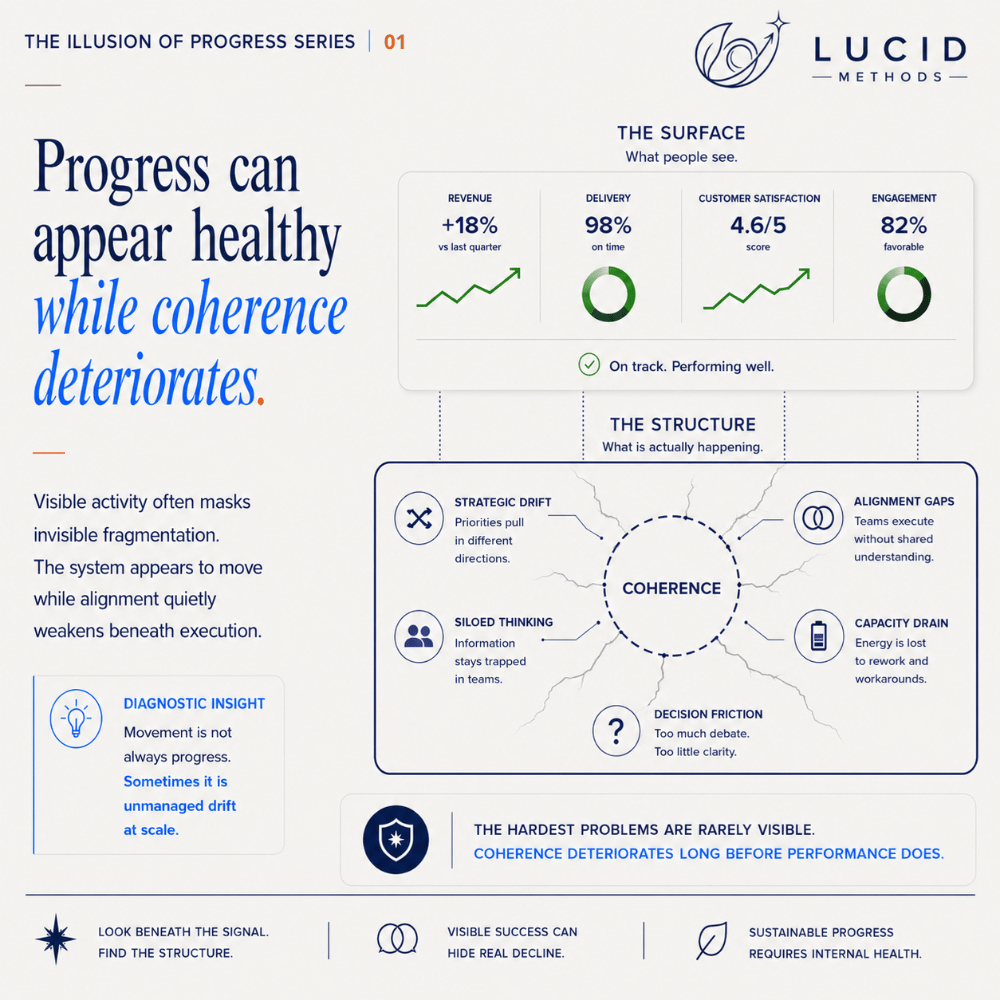
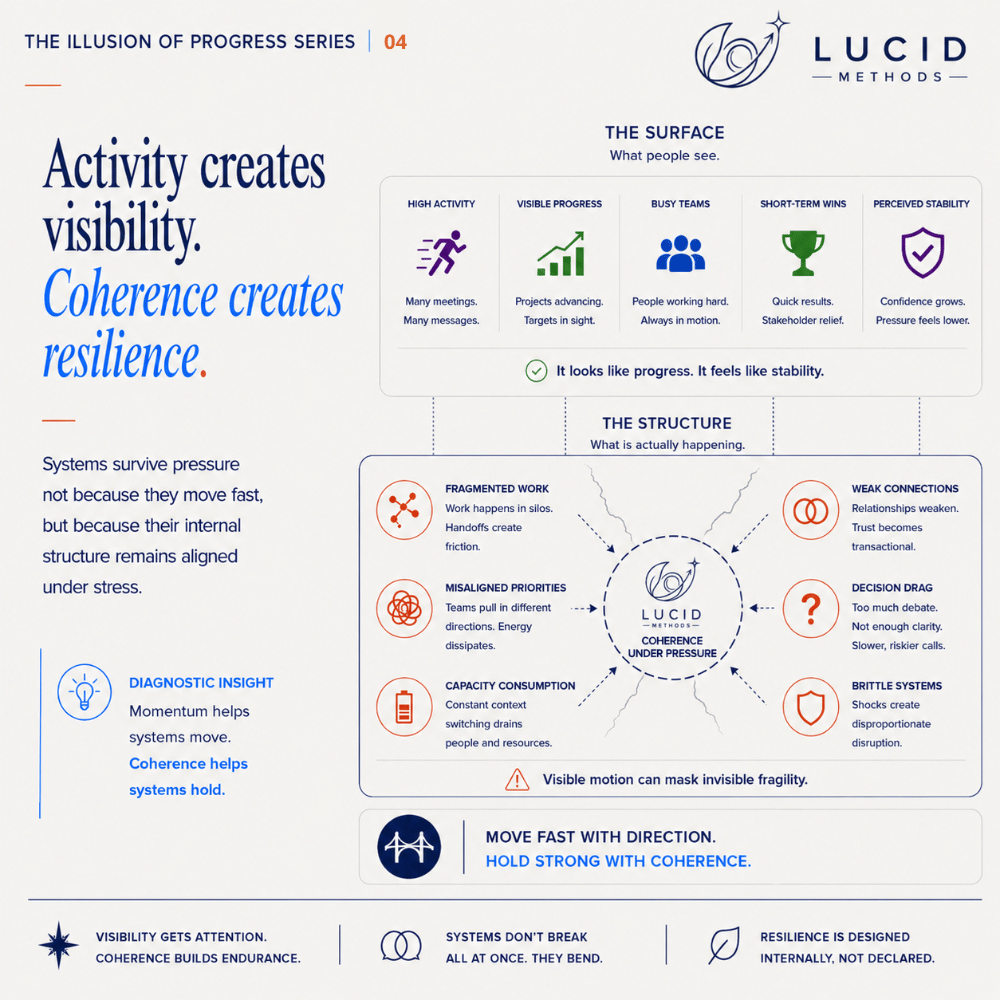
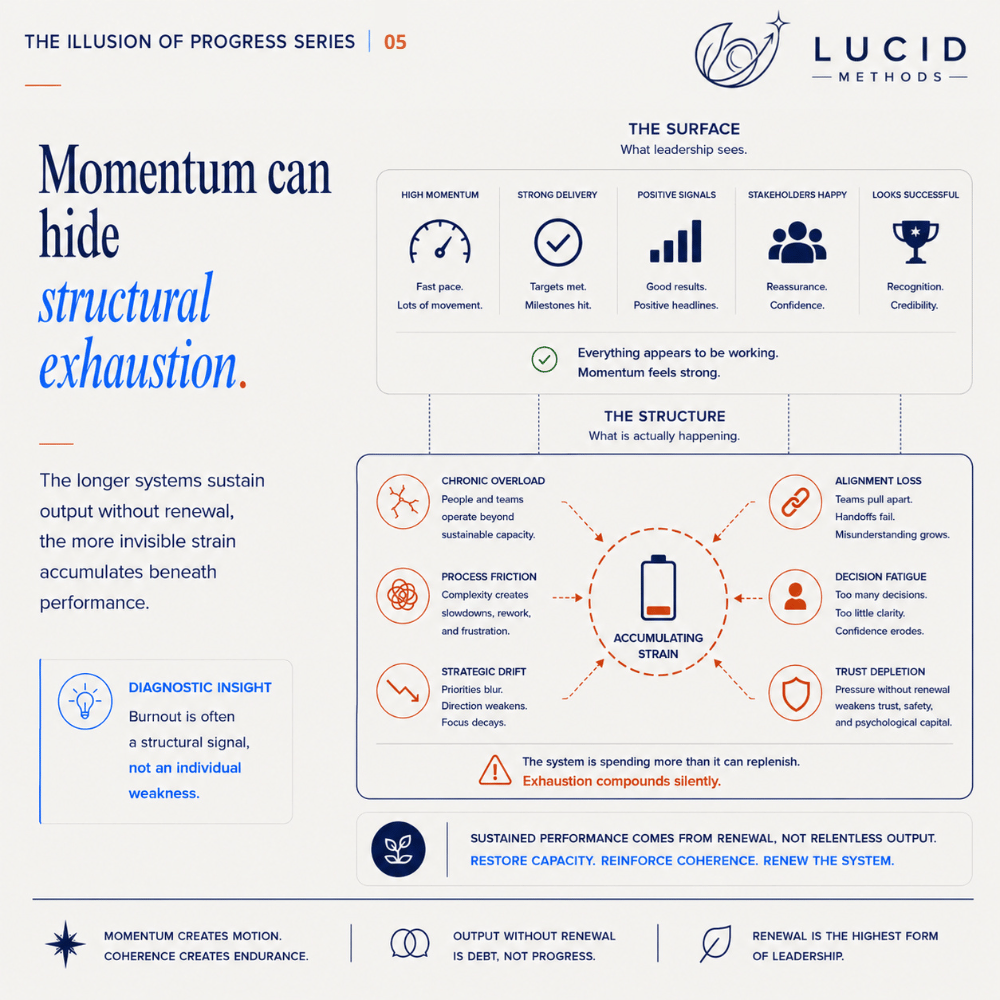
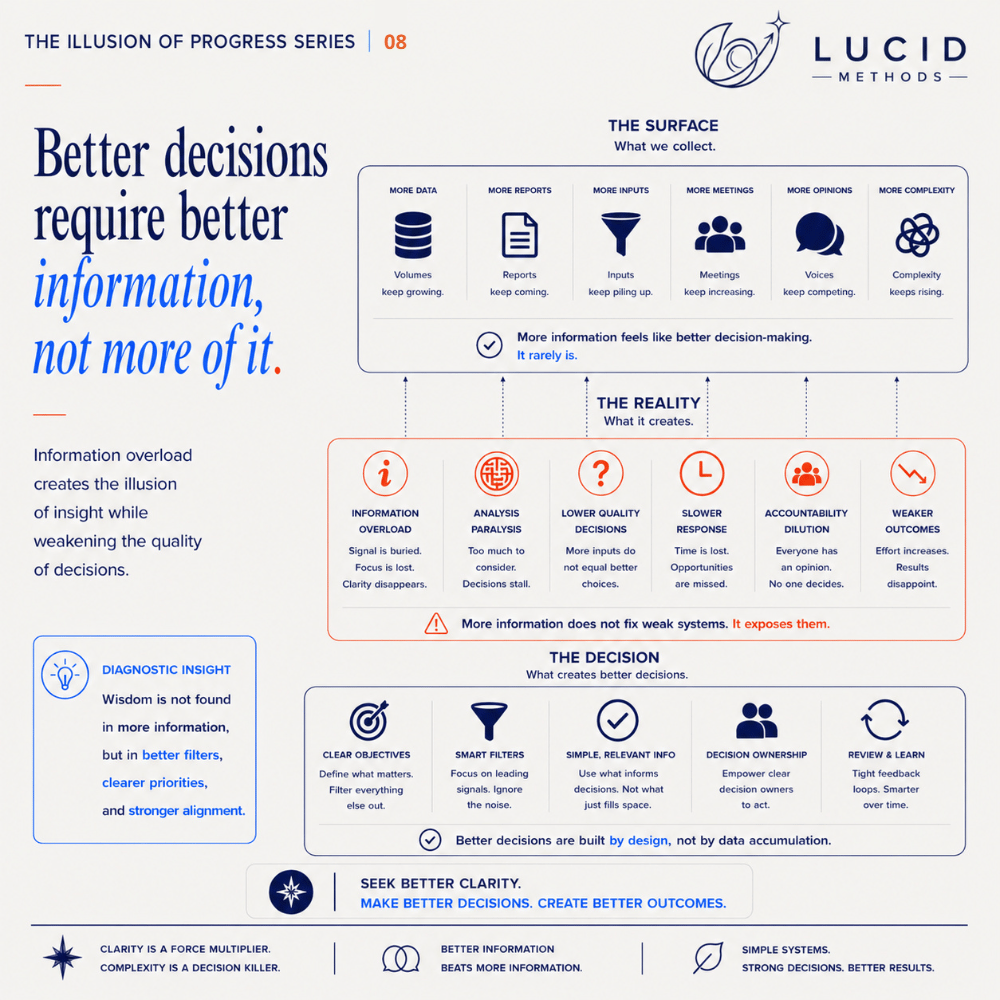
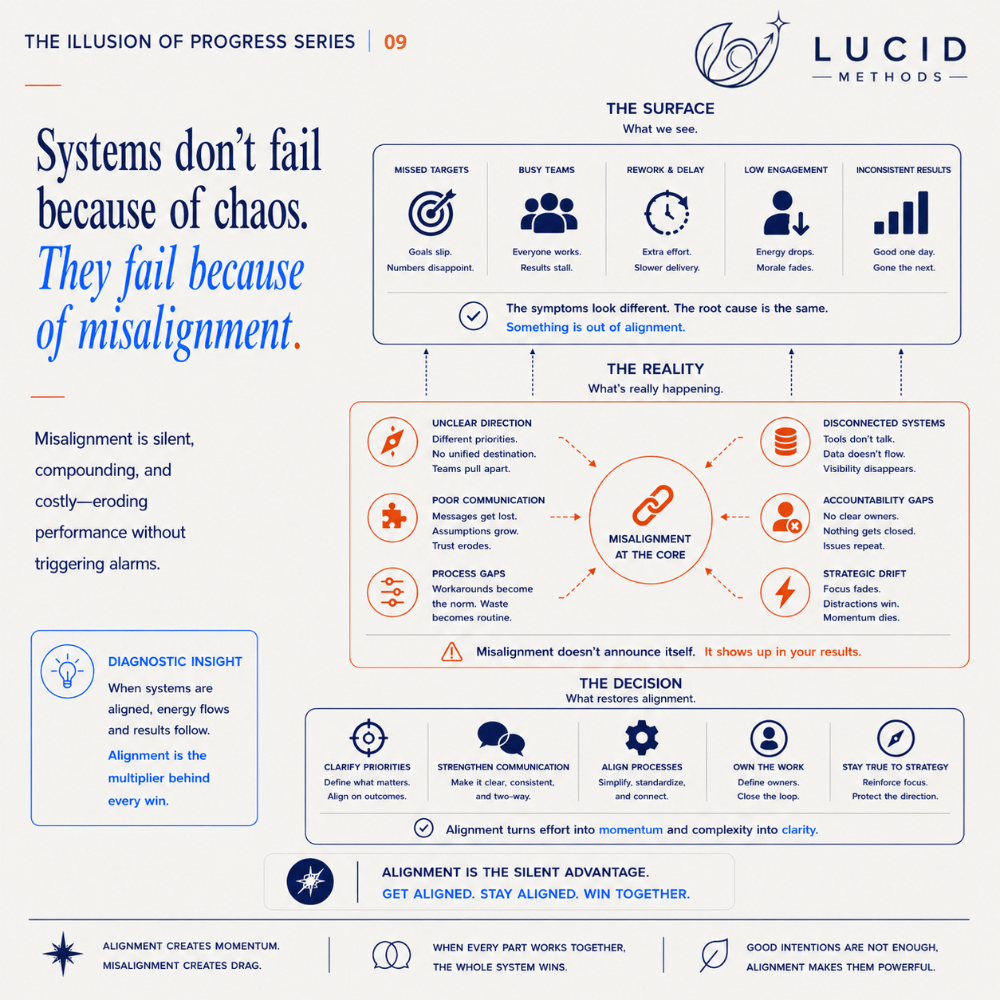
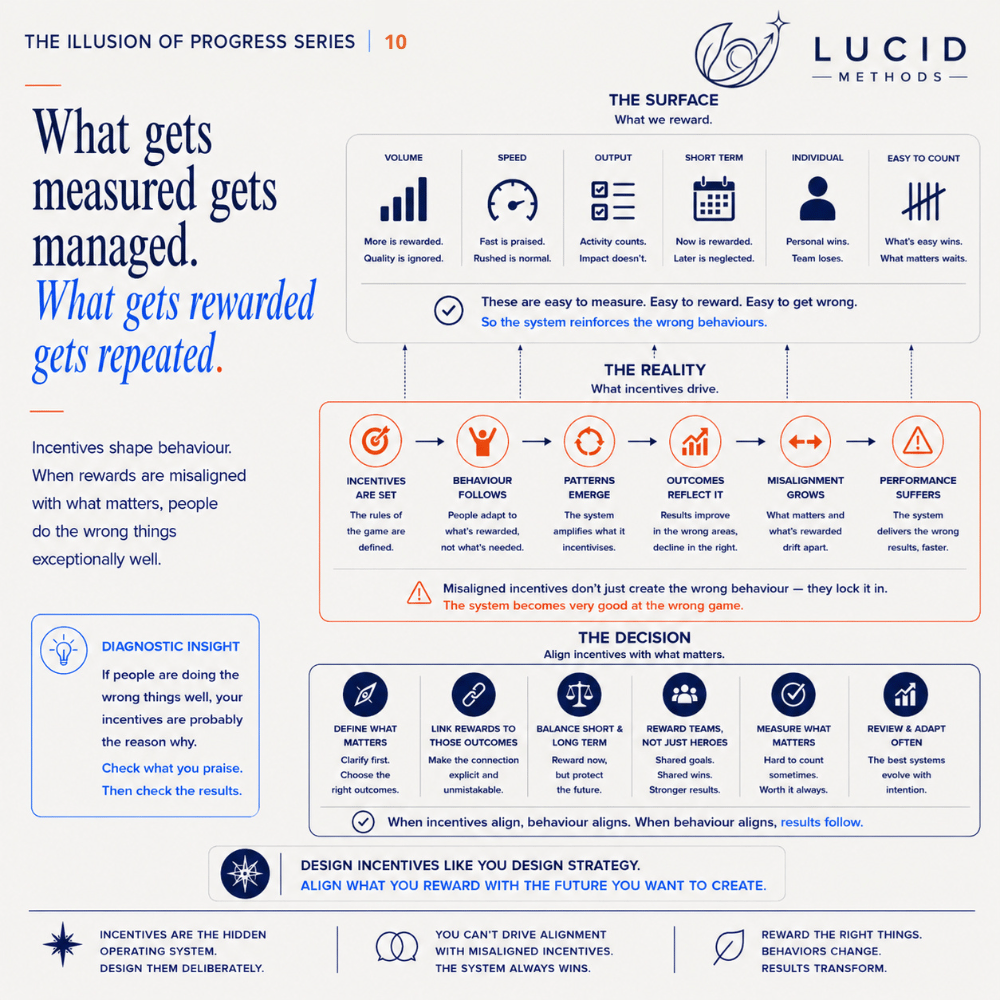
Most transformation efforts do not fail suddenly.
They weaken quietly beneath visible activity.
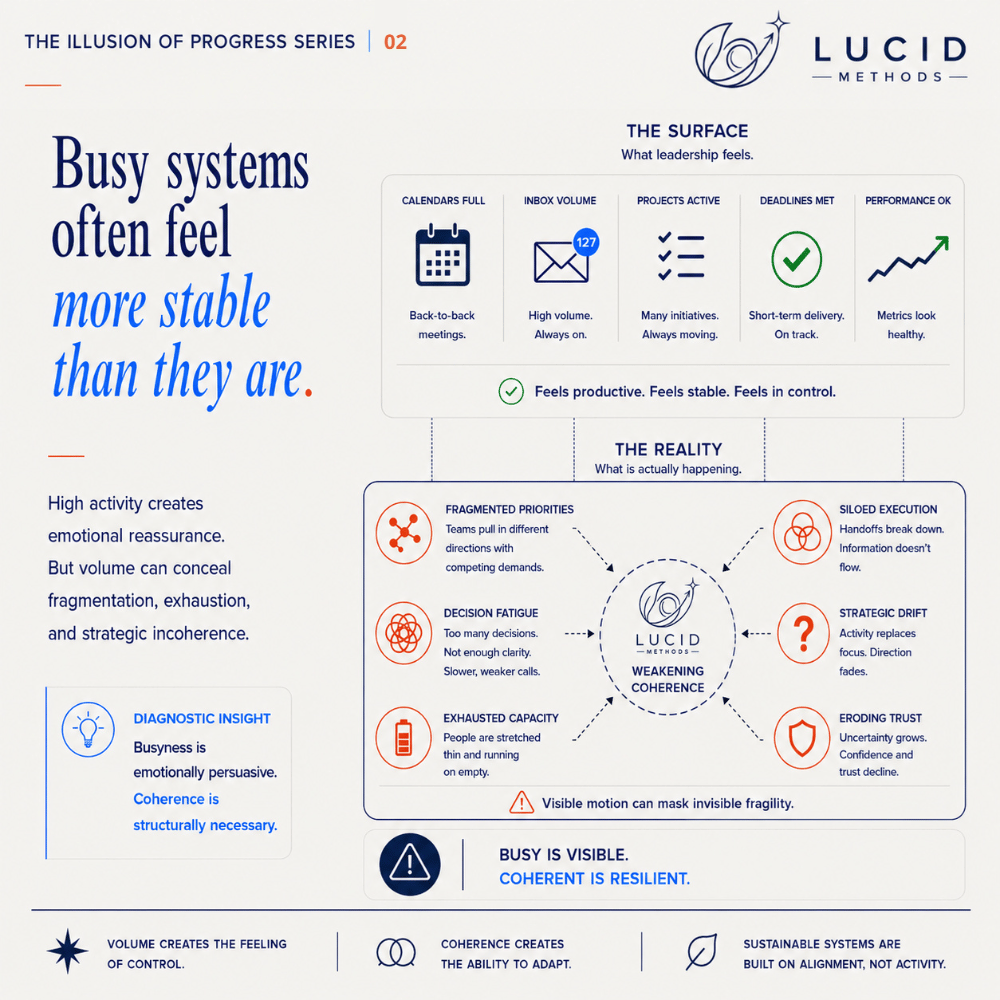
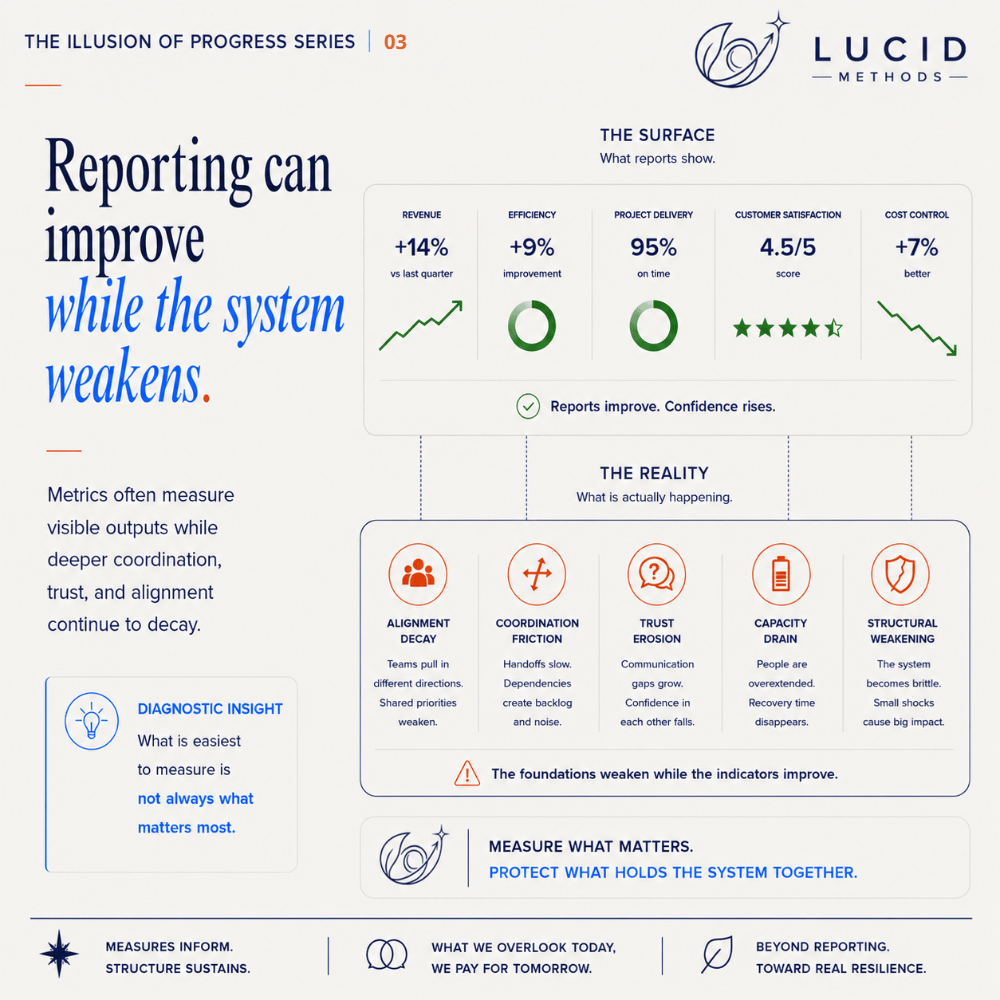
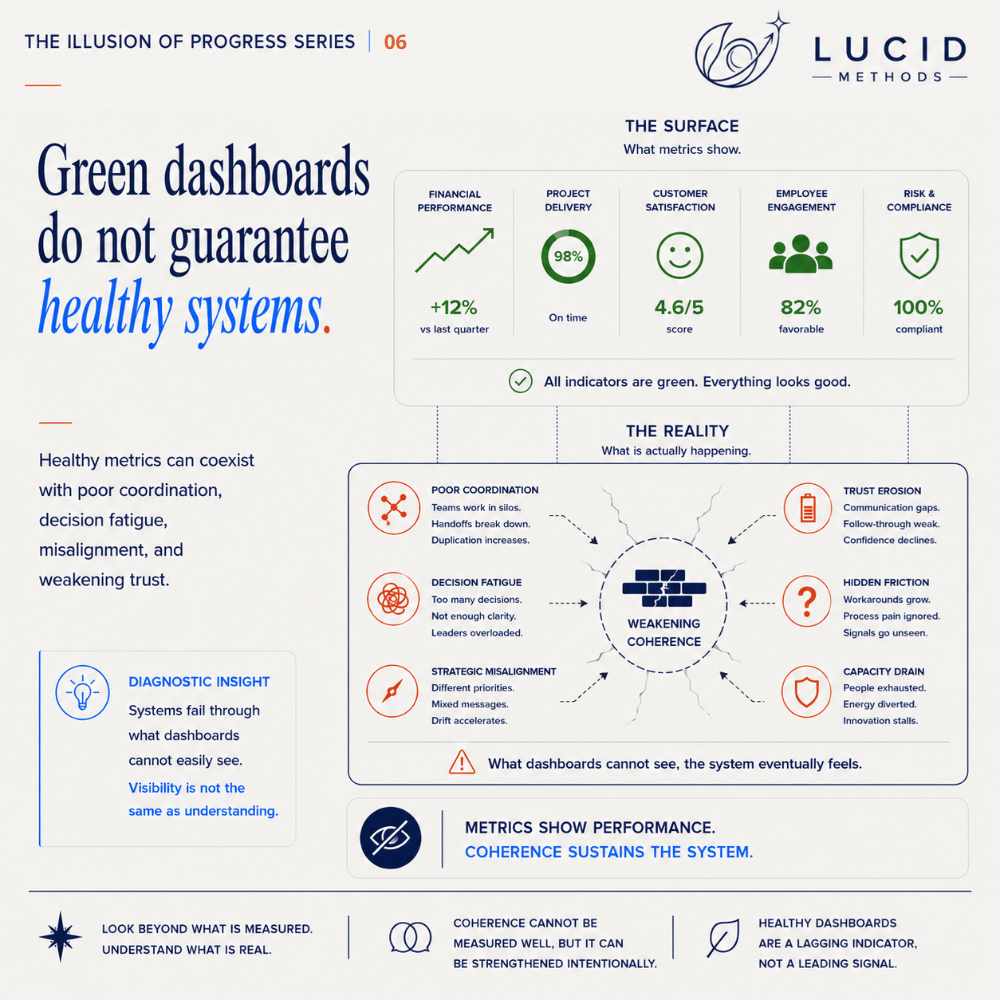
Busy teams, green dashboards, strong momentum, and constant reporting can create the appearance of progress — even while alignment, trust, coordination, and decision clarity deteriorate underneath.
This carousel explores a pattern I’ve repeatedly observed across organisations:
𝐒𝐮𝐫𝐟𝐚𝐜𝐞 𝐩𝐞𝐫𝐟𝐨𝐫𝐦𝐚𝐧𝐜𝐞 𝐜𝐚𝐧 𝐢𝐦𝐩𝐫𝐨𝐯𝐞 𝐰𝐡𝐢𝐥𝐞 𝐬𝐲𝐬𝐭𝐞𝐦𝐢𝐜 𝐜𝐨𝐡𝐞𝐫𝐞𝐧𝐜𝐞 𝐝𝐞𝐜𝐥𝐢𝐧𝐞𝐬.
The danger is not inactivity.
The danger is unmanaged fragmentation hidden behind movement.
Because transformation rarely collapses from a lack of effort.
𝐼𝑡 𝑐𝑜𝑙𝑙𝑎𝑝𝑠𝑒𝑠 𝑤ℎ𝑒𝑛 𝑖𝑛𝑡𝑒𝑟𝑝𝑟𝑒𝑡𝑎𝑡𝑖𝑜𝑛 𝑑𝑖𝑣𝑒𝑟𝑔𝑒𝑠 𝑓𝑎𝑠𝑡𝑒𝑟 𝑡ℎ𝑎𝑛 𝑎𝑙𝑖𝑔𝑛𝑚𝑒𝑛𝑡 𝑐𝑎𝑛 𝑟𝑒𝑐𝑜𝑣𝑒𝑟.
Coherence Decay
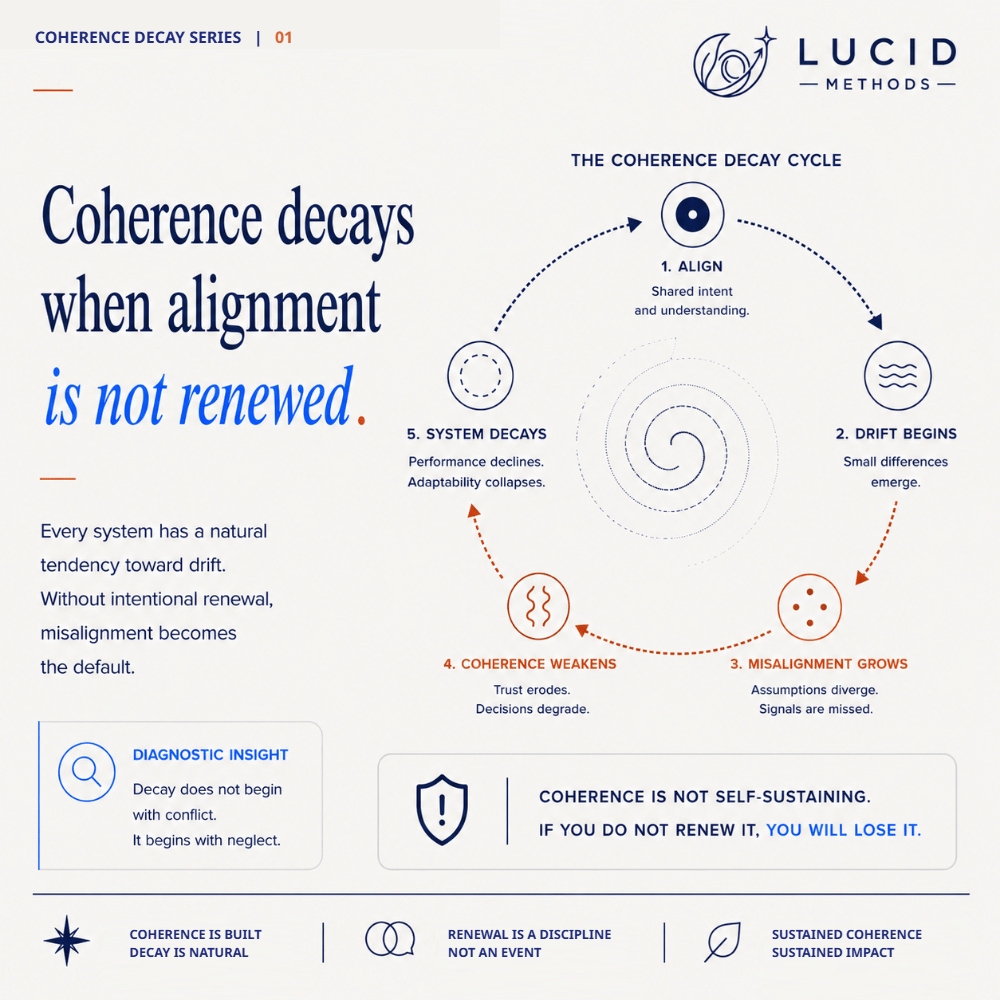
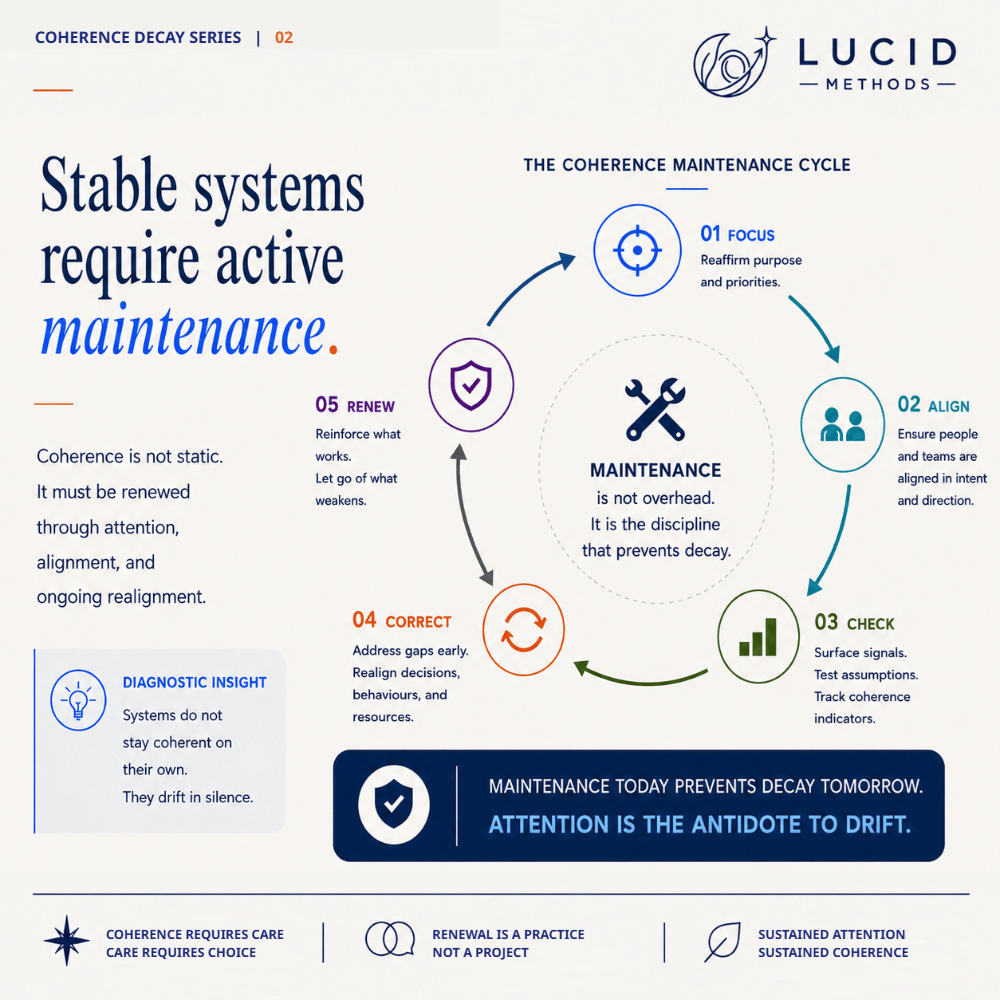
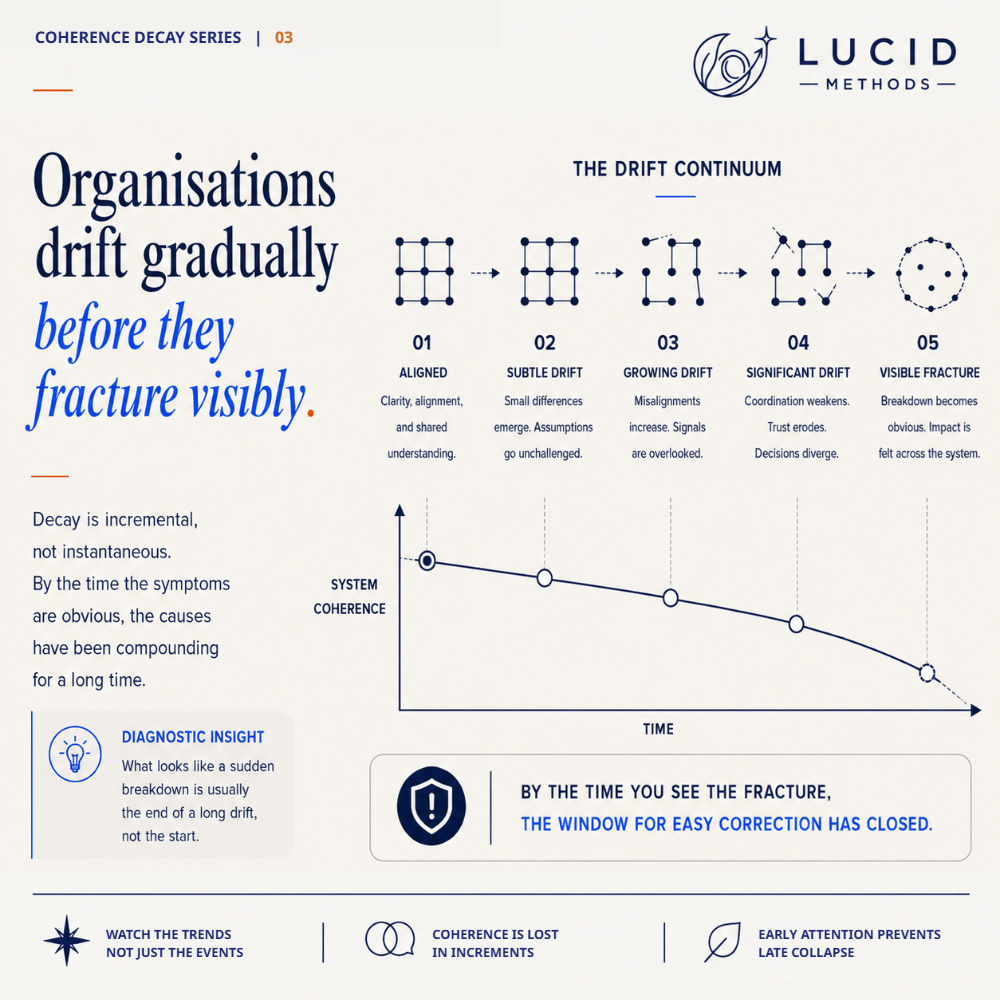
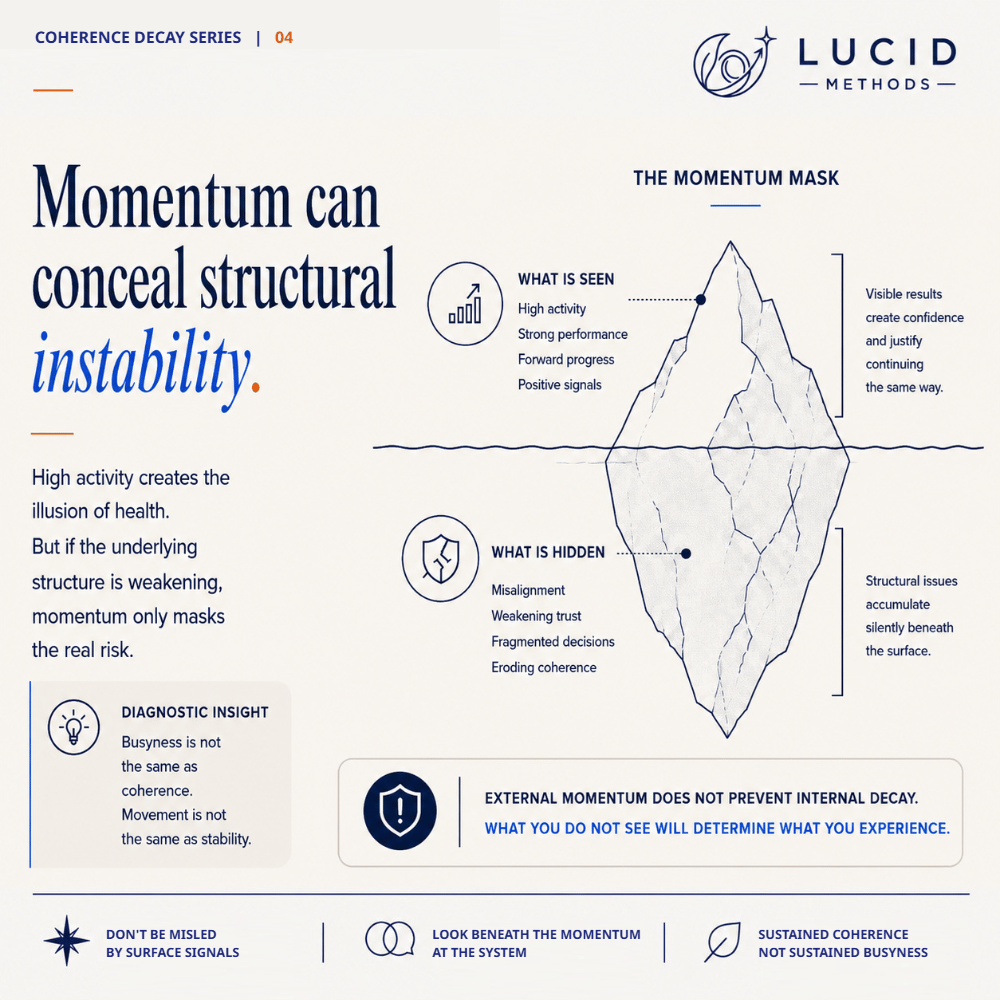
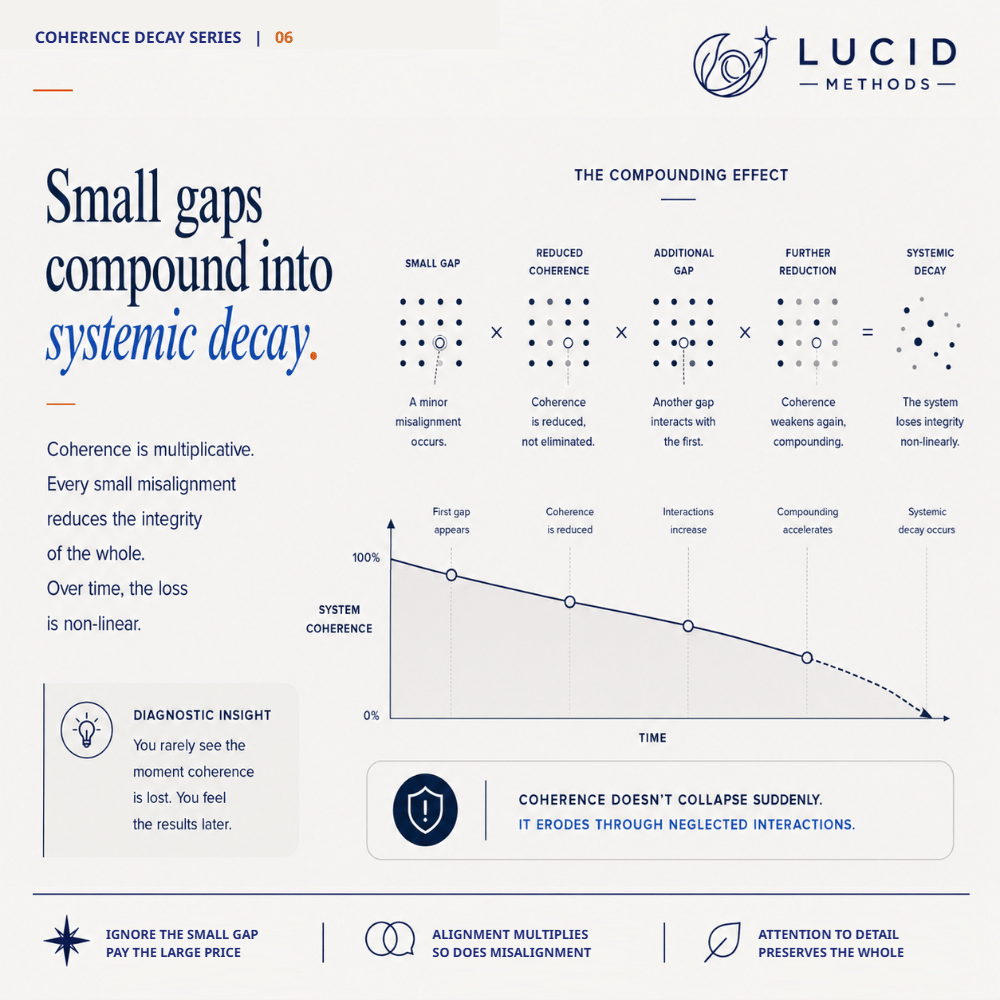
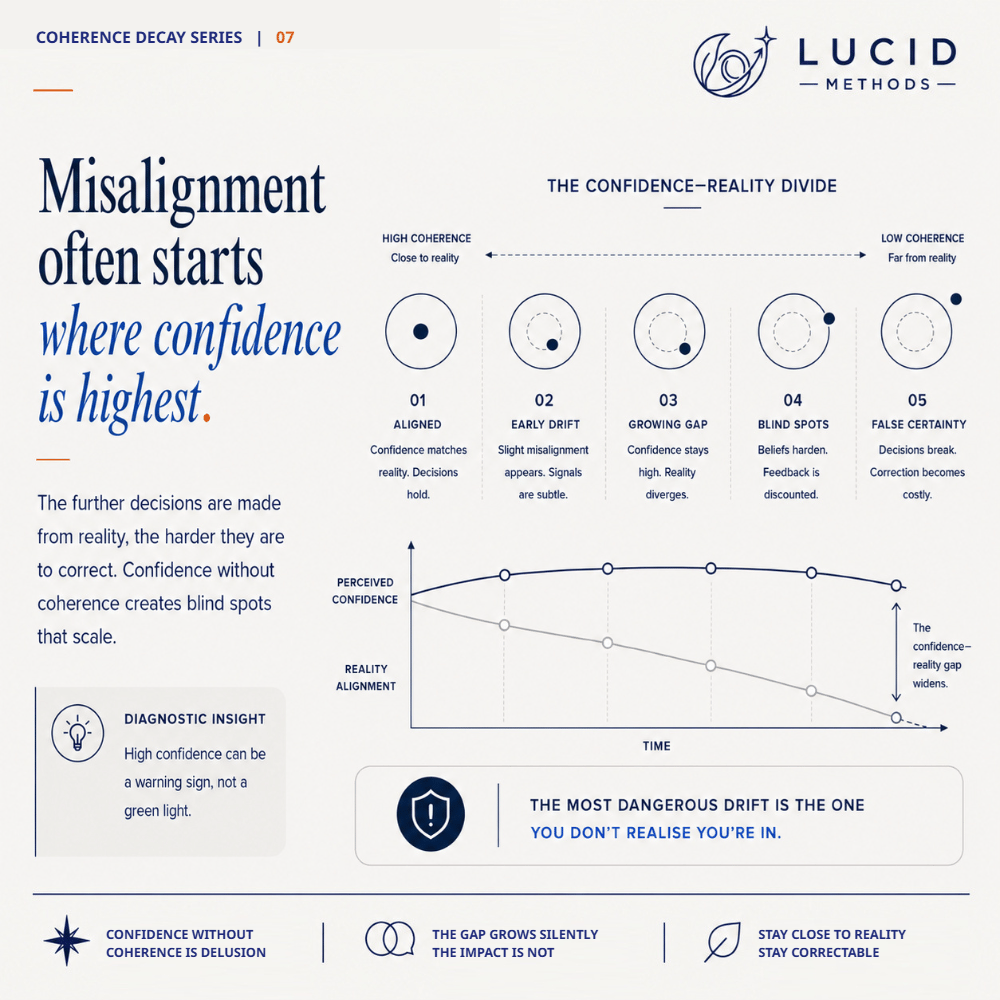
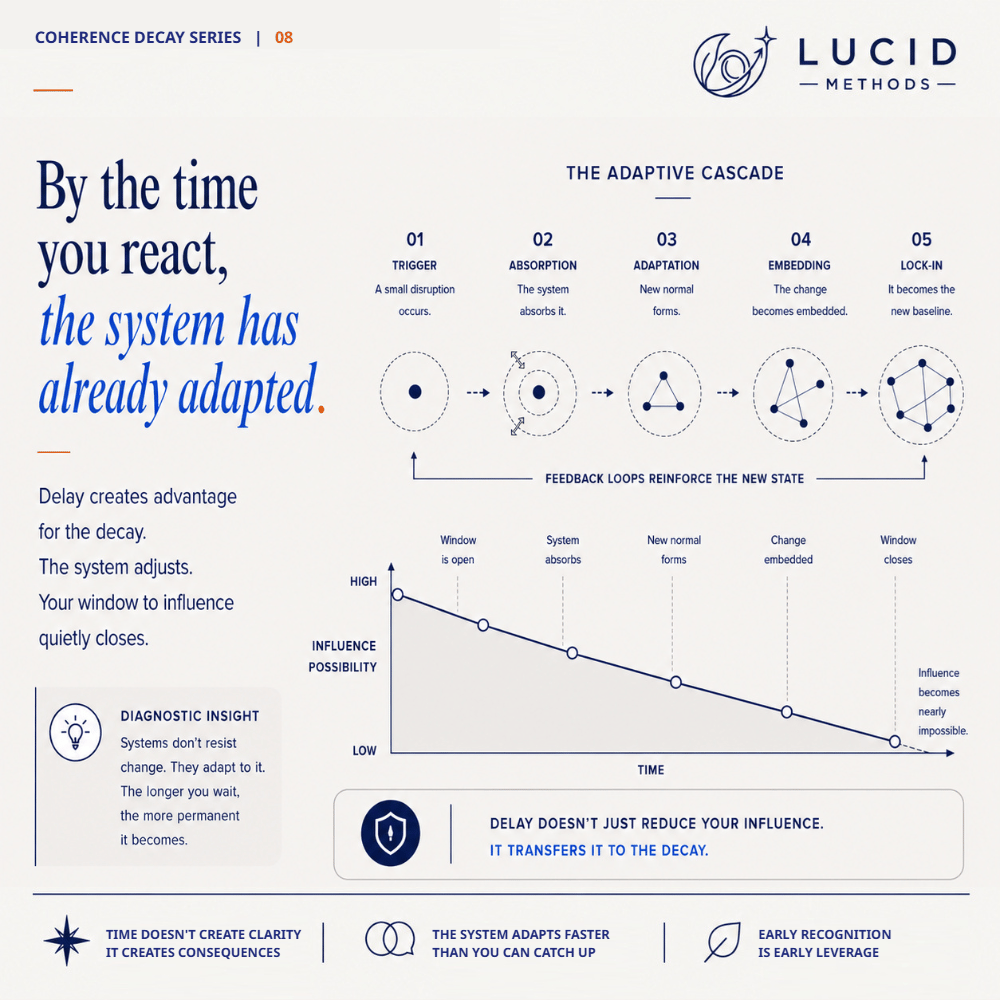
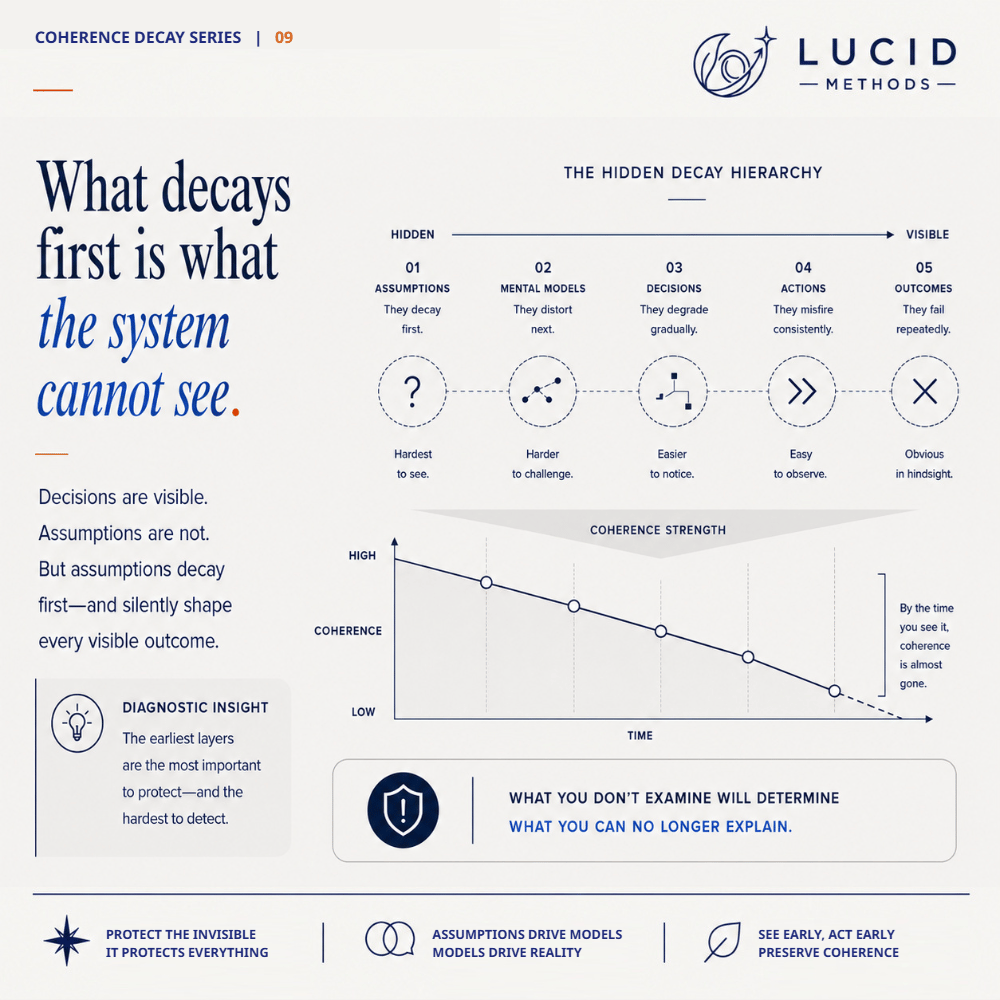
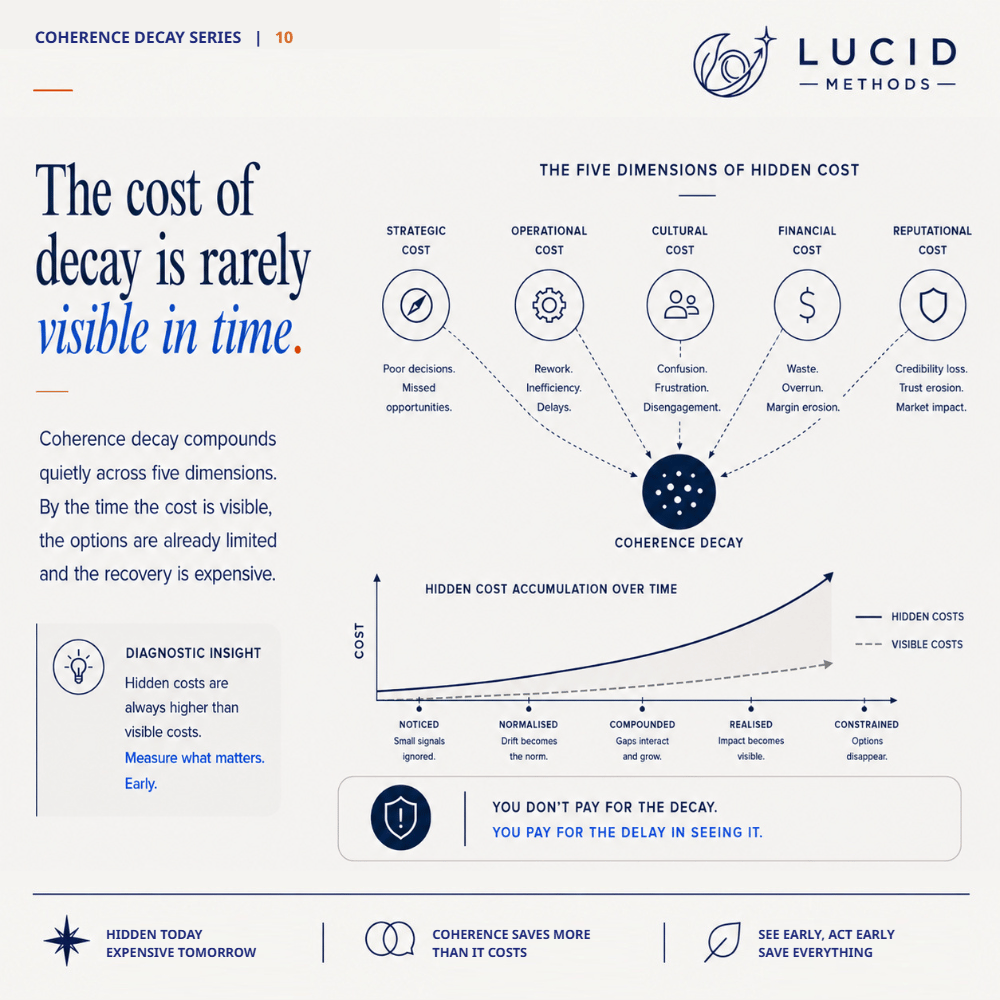
Many organisational failures do not begin with visible collapse.
They begin quietly through gradual coherence decay.
Priorities slowly compete instead of reinforce.
Interpretation begins diverging across teams.
Coordination becomes heavier.
Meetings increase.
Decisions slow.
Trust weakens beneath the surface.
Yet from the outside, the organisation may still appear healthy.
Delivery continues.
Dashboards remain positive.
Teams stay busy.
Momentum still looks visible.
This is what makes coherence decay dangerous.
Systems rarely fail only at the moment performance visibly declines. More often, deterioration accumulates gradually beneath ongoing activity long before instability becomes obvious.
Healthy organisations are not sustained through effort alone.
They are sustained through structural coherence:
· shared meaning
· aligned priorities
· coordinated execution
· visible feedback
· adaptive learning
Without coherence, even capable teams begin drifting apart while believing they are still moving together.
Most systems fail quietly before they fail visibly.
Hidden Friction in Organisational Change
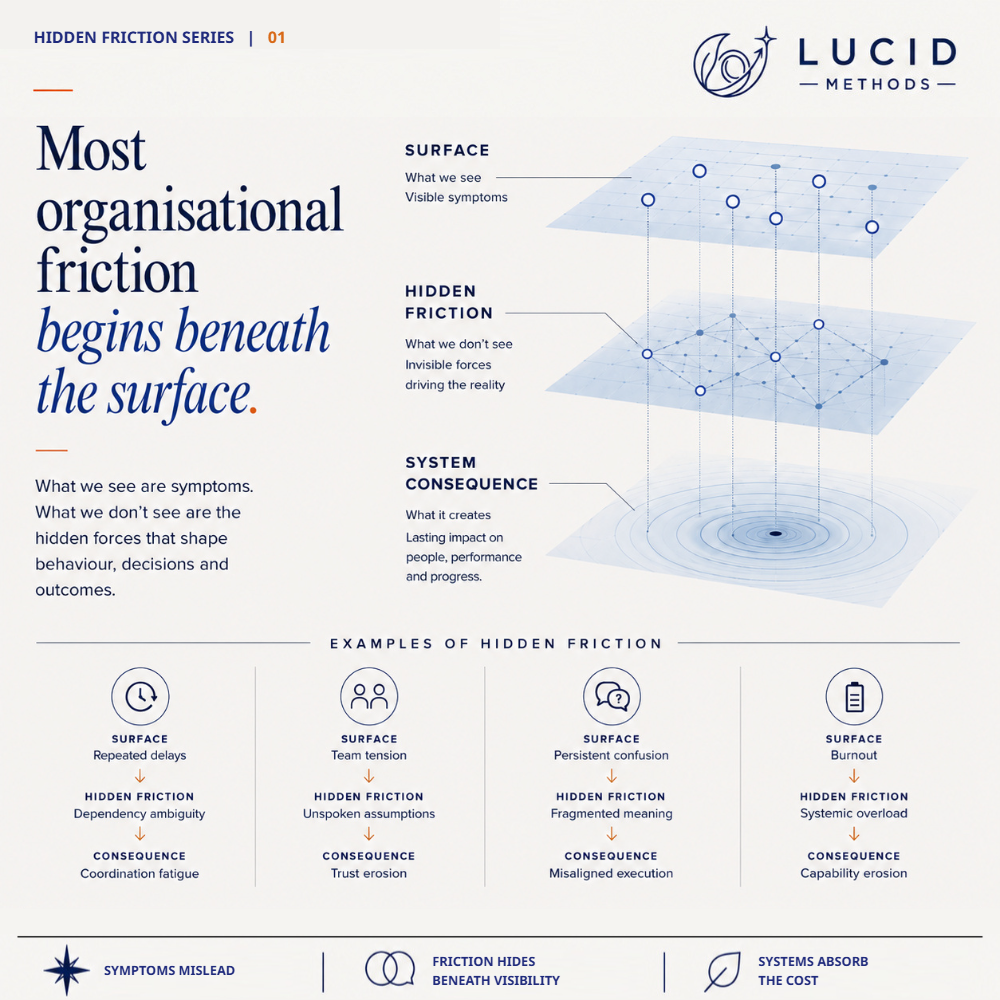
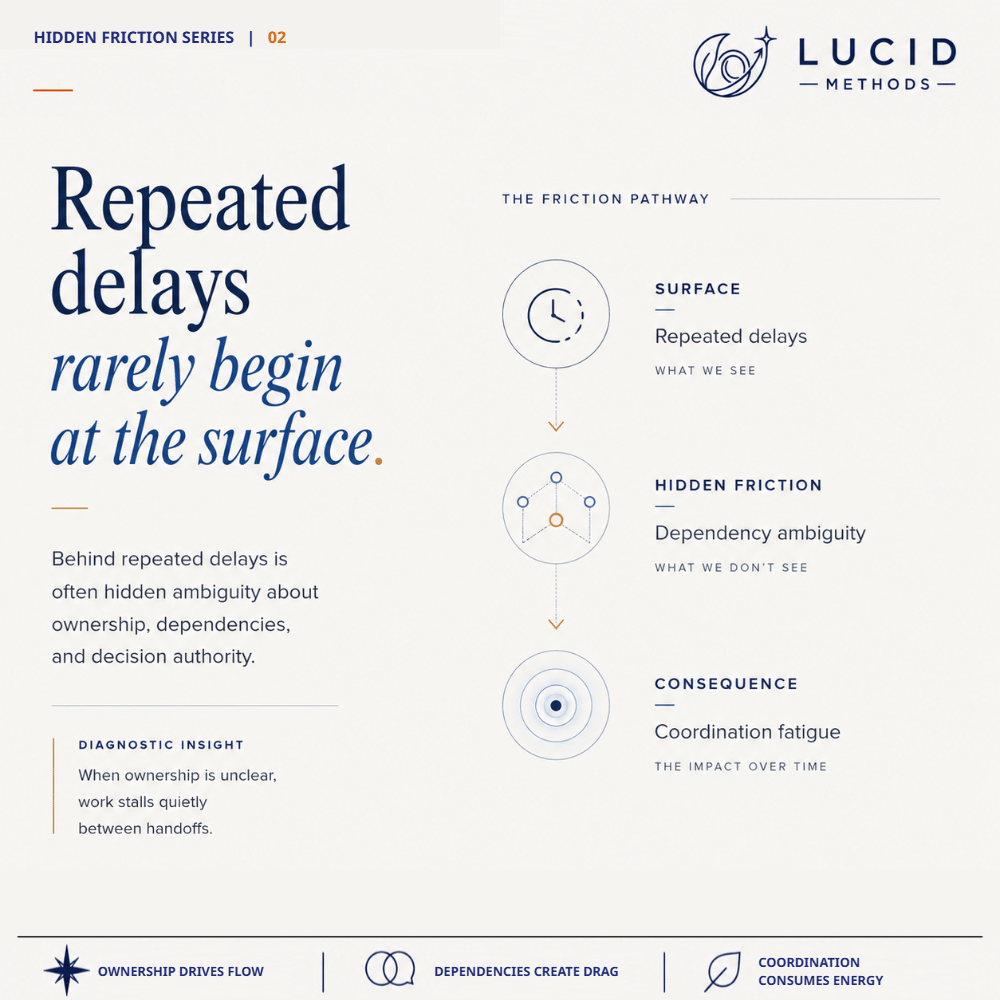
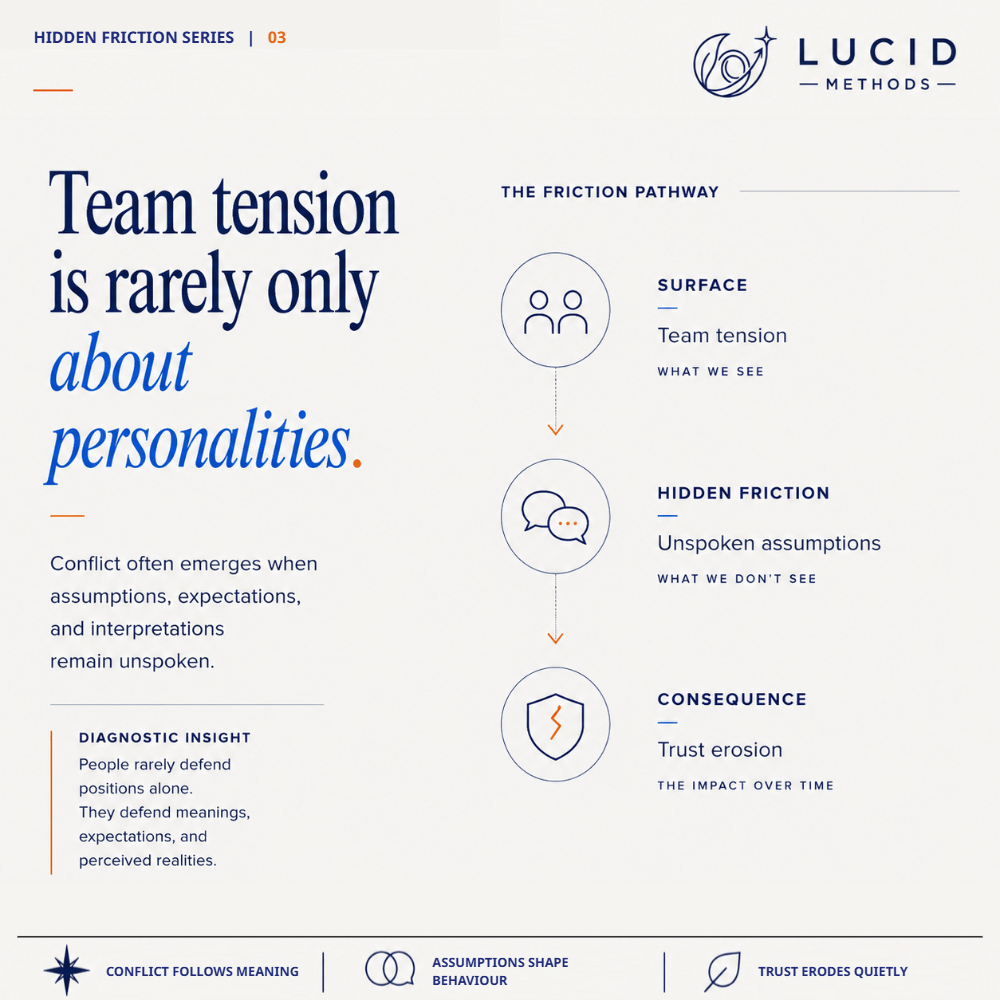
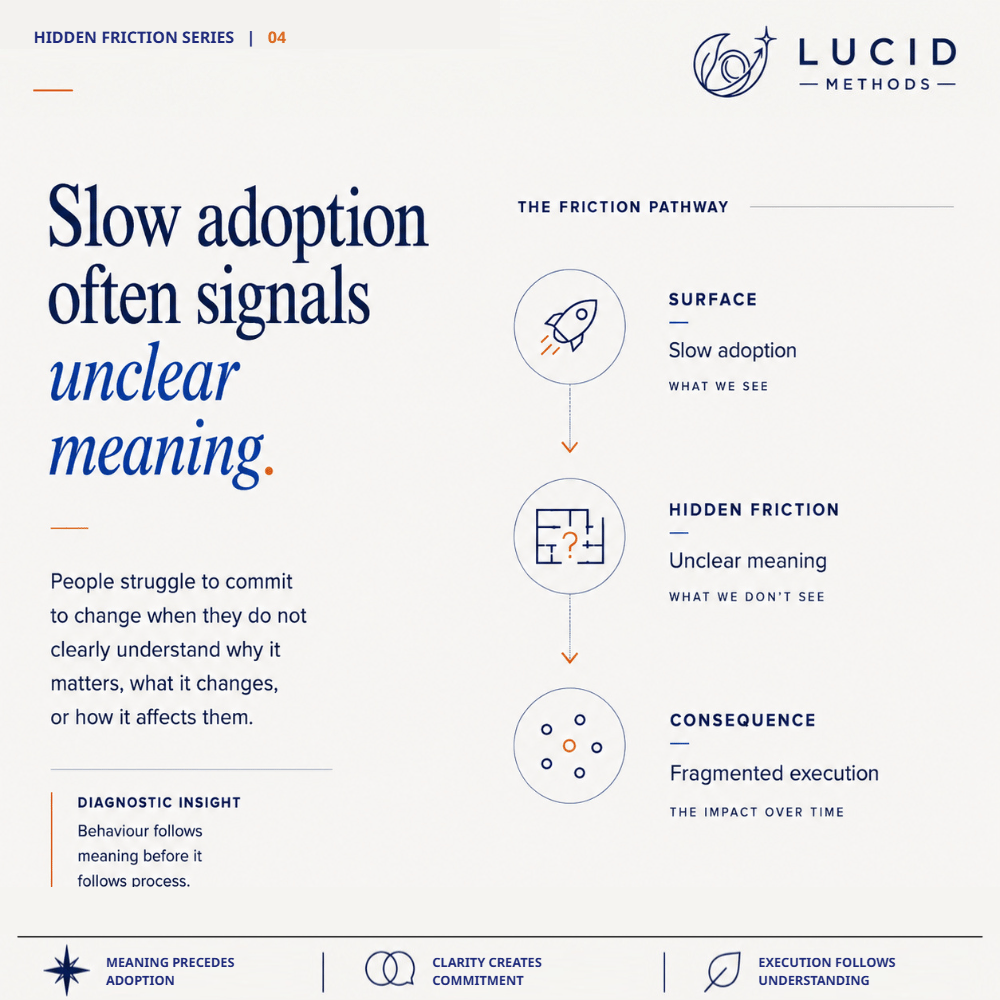
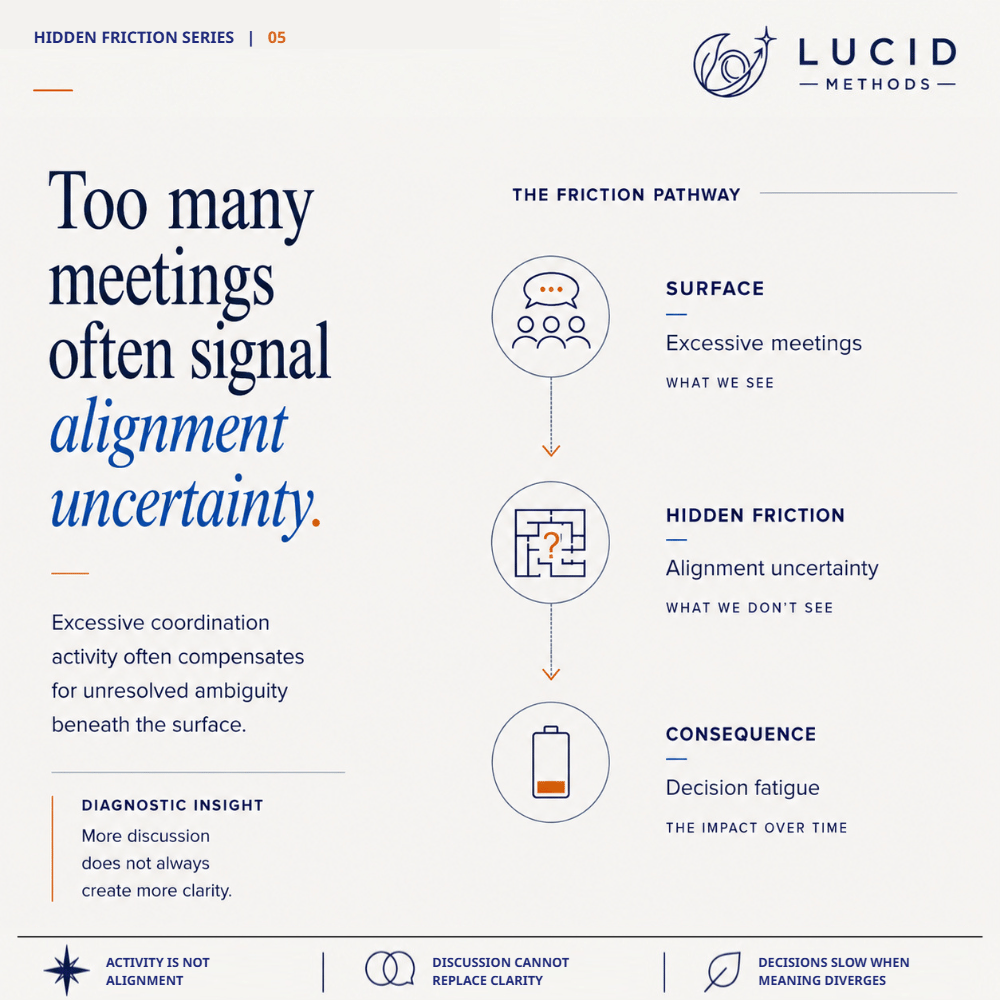
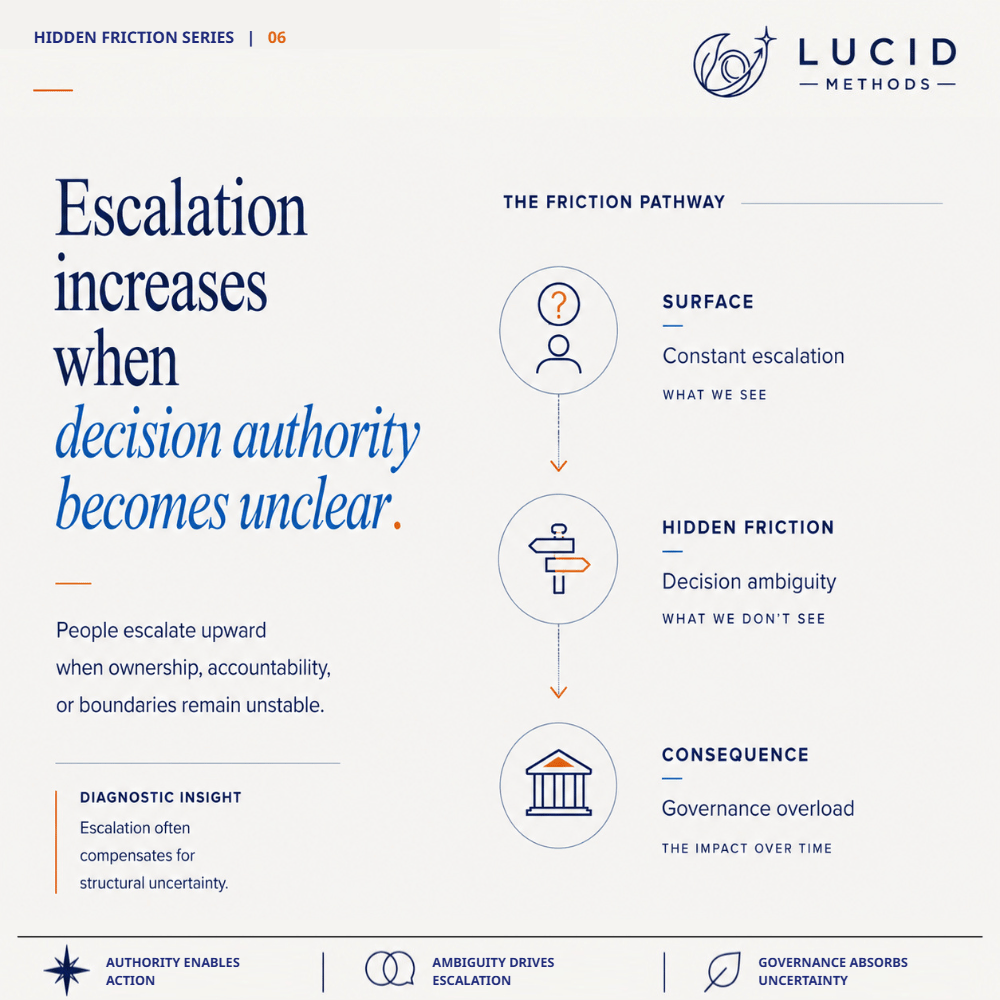
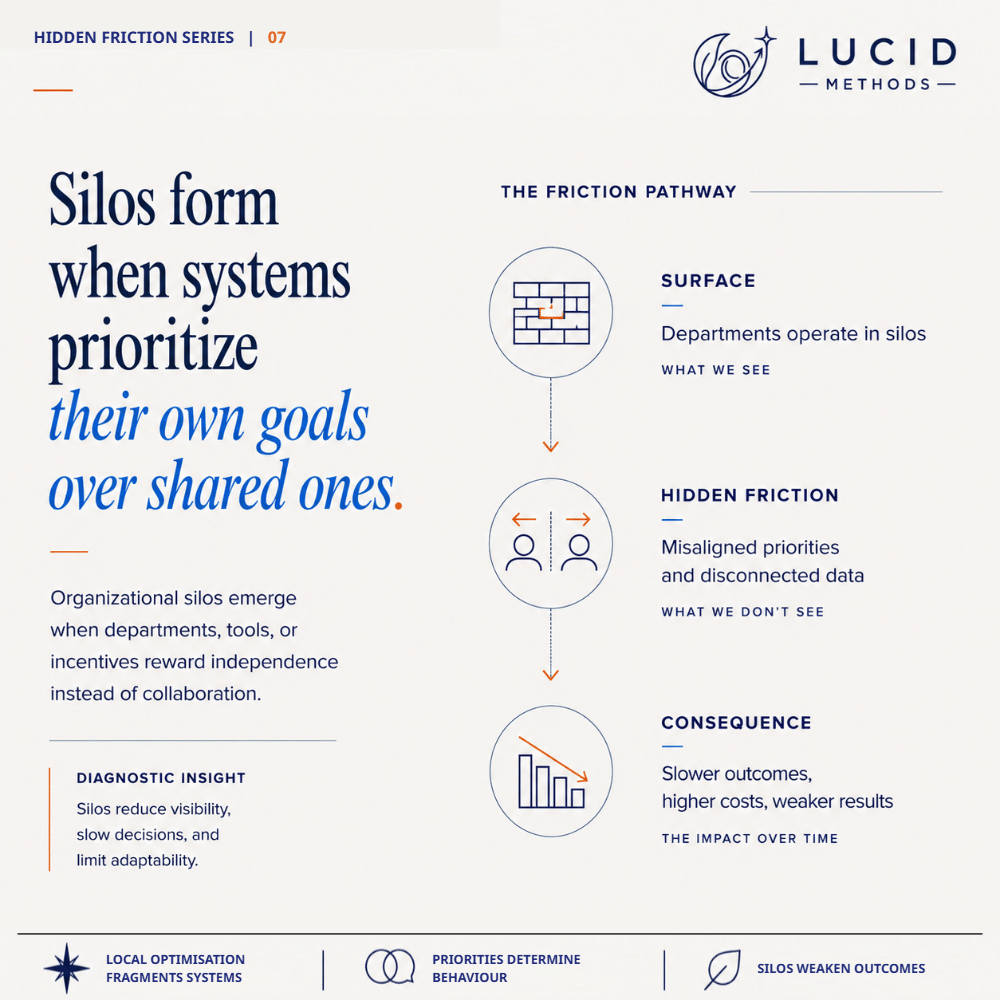
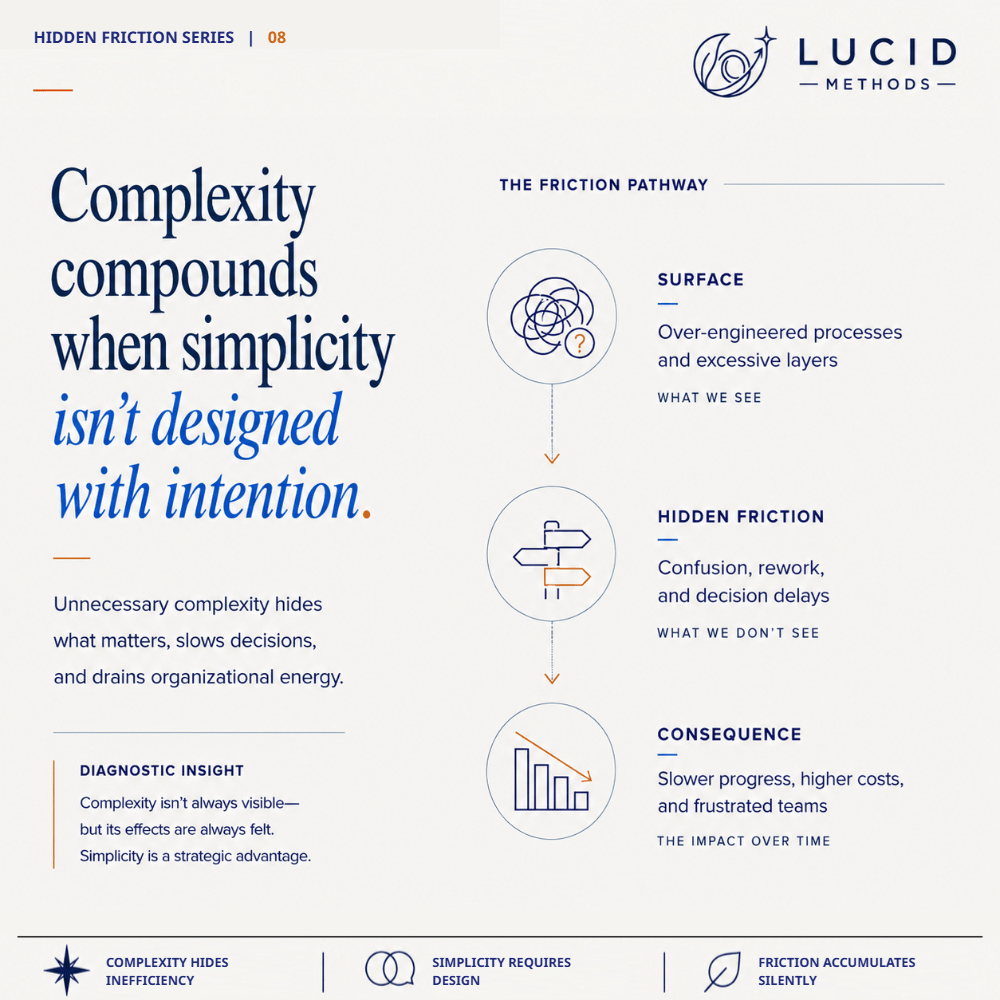
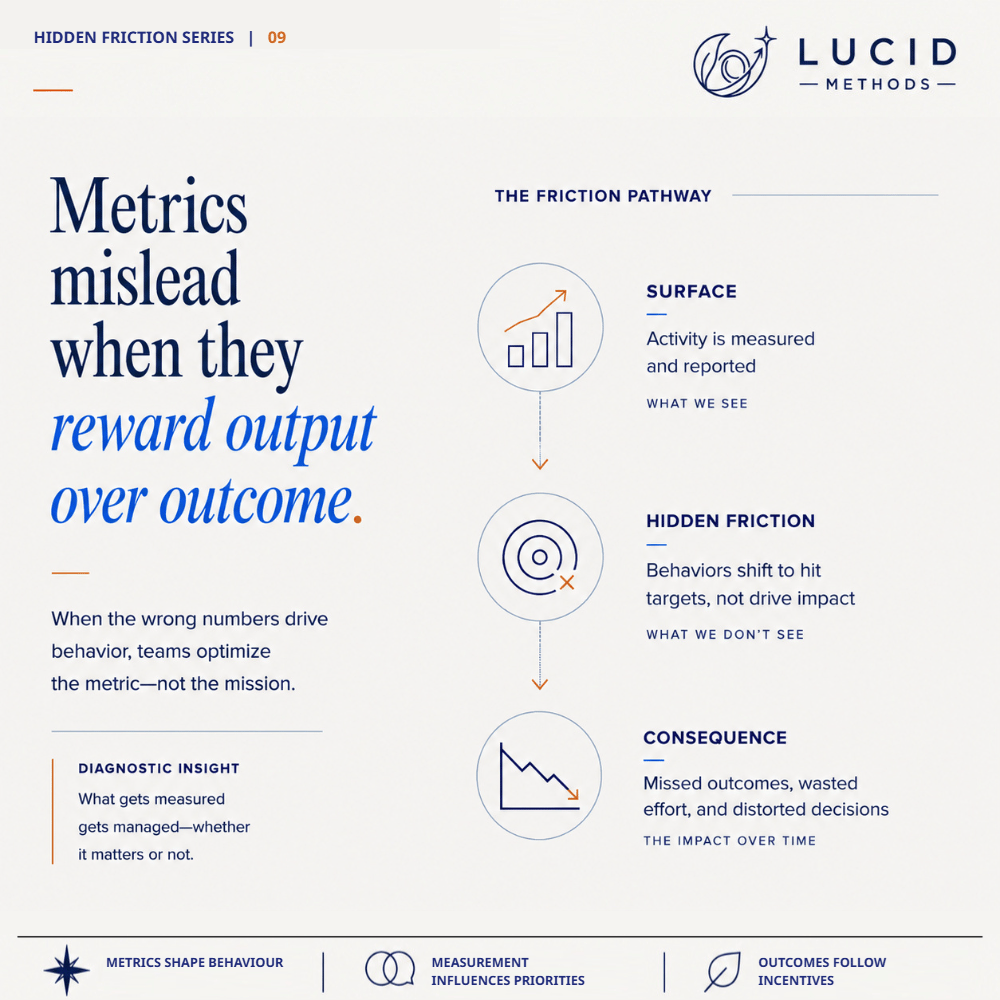
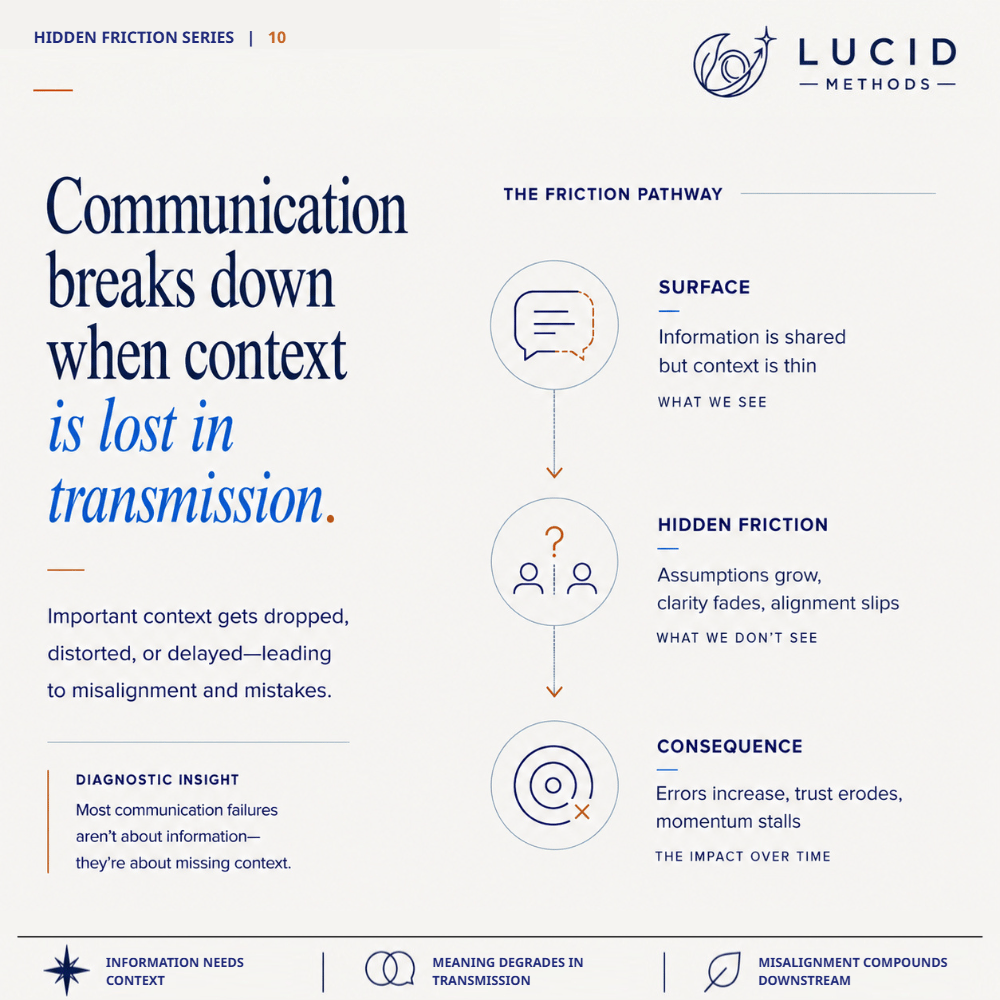
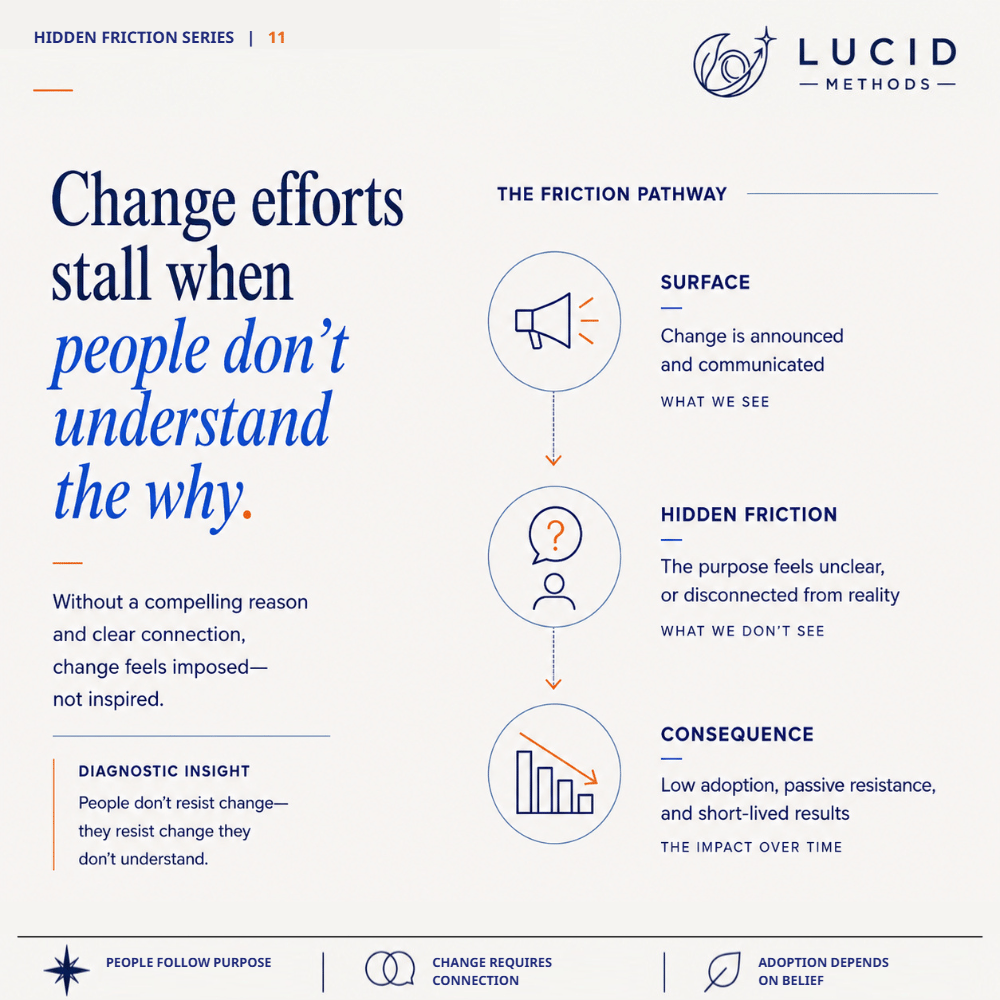
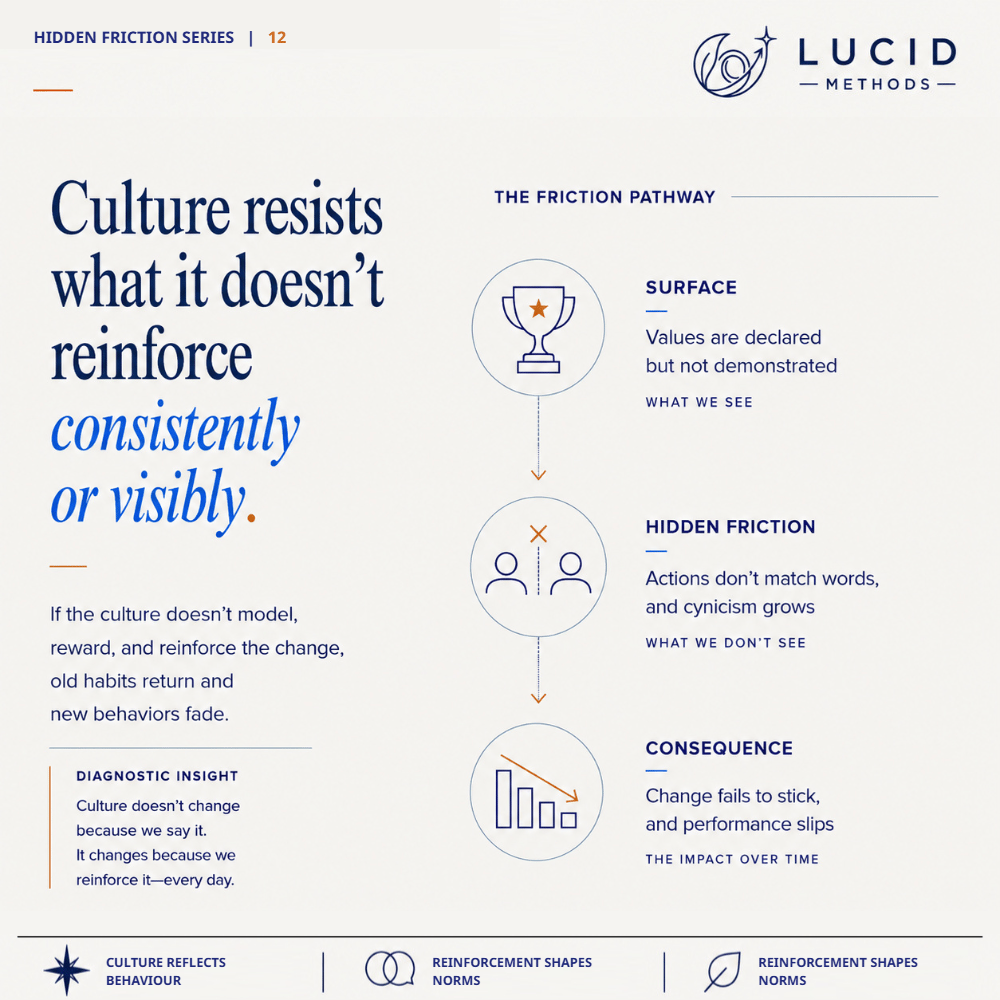
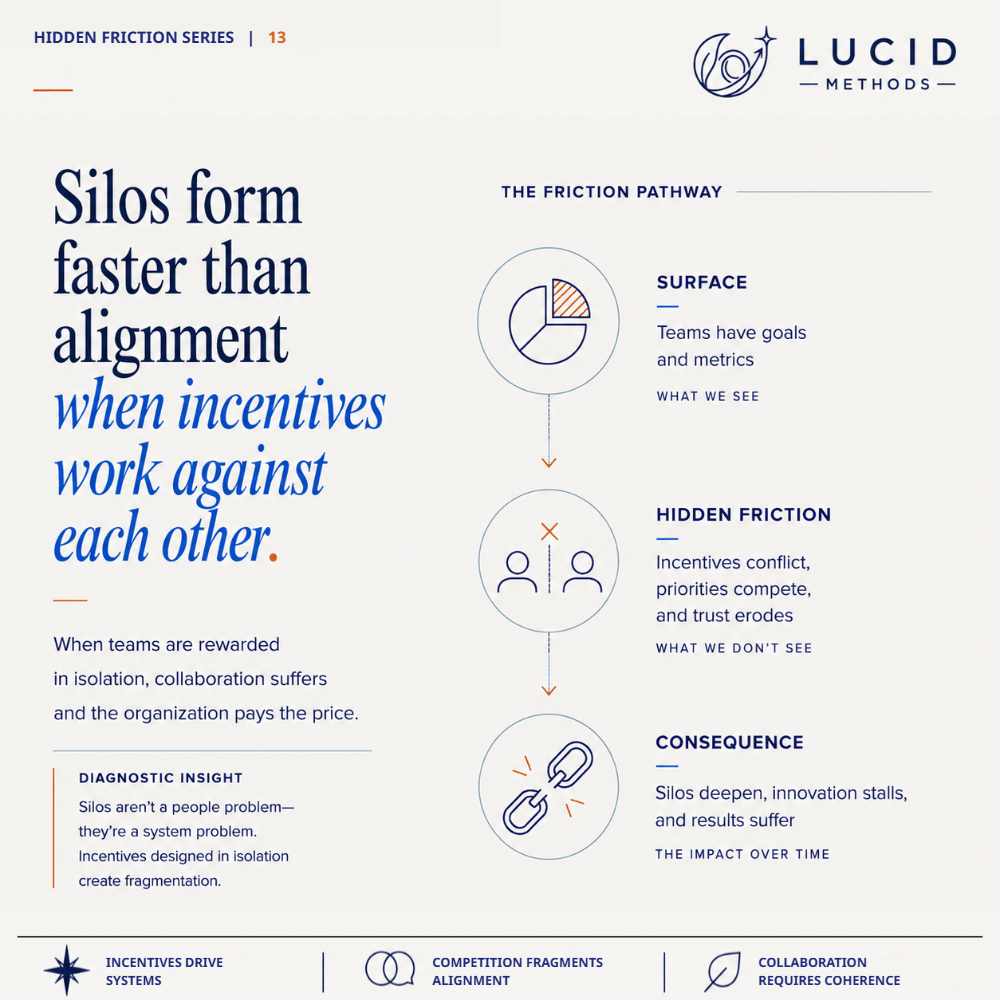
Many organisational problems do not begin as visible crises.
They begin quietly beneath the surface.
Repeated delays.
Decision fatigue.
Slow adoption.
Silos.
Escalation loops.
Fragmented execution.
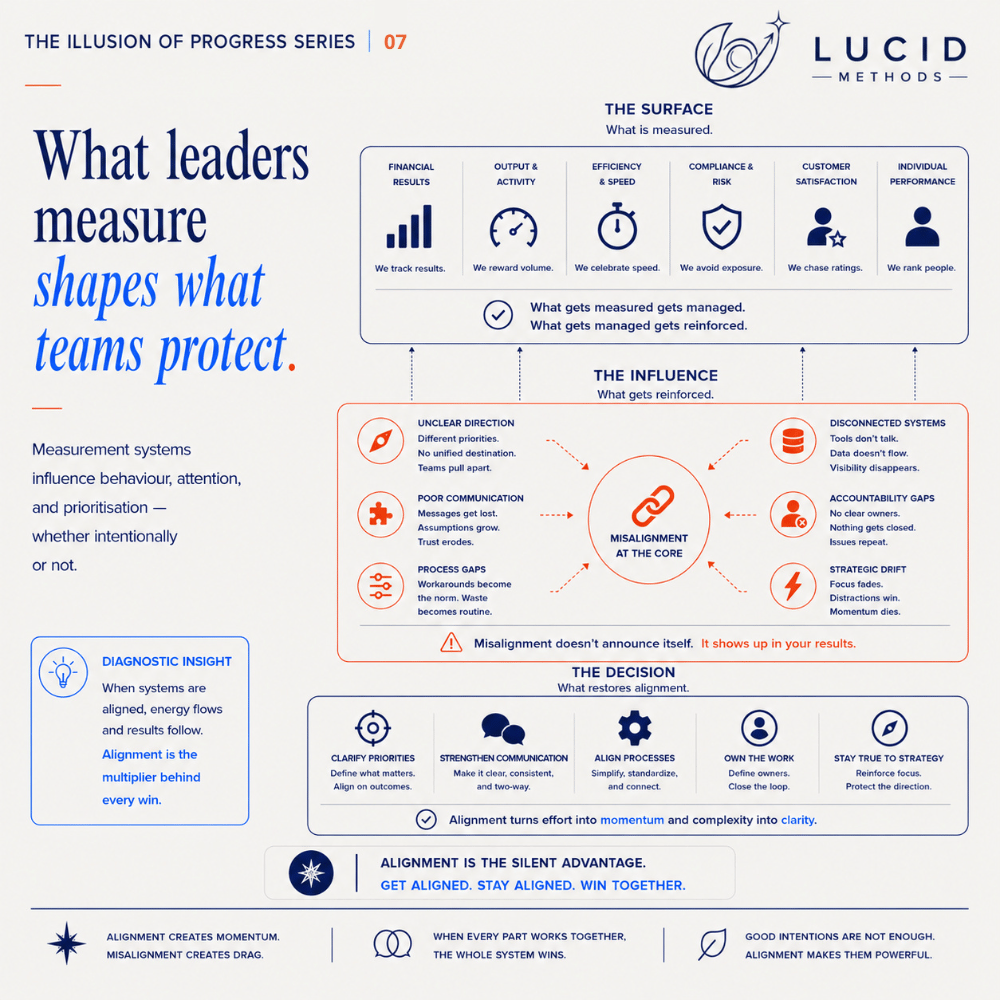
What organisations often treat as isolated operational issues are frequently symptoms of deeper structural friction:
- unclear ownership
- competing priorities
- interpretation drift
- alignment uncertainty
- incentive conflict
- lost context across teams
The challenge is not always effort.
Often, it is coherence.
When hidden friction accumulates over time, organisations become busier but less aligned — creating motion without sustainable progress.
This carousel explores how invisible organisational friction shapes behaviour, decisions, execution, and long-term outcomes.
Because sustainable transformation depends not only on activity…
but on clarity, alignment, and shared understanding across the system.
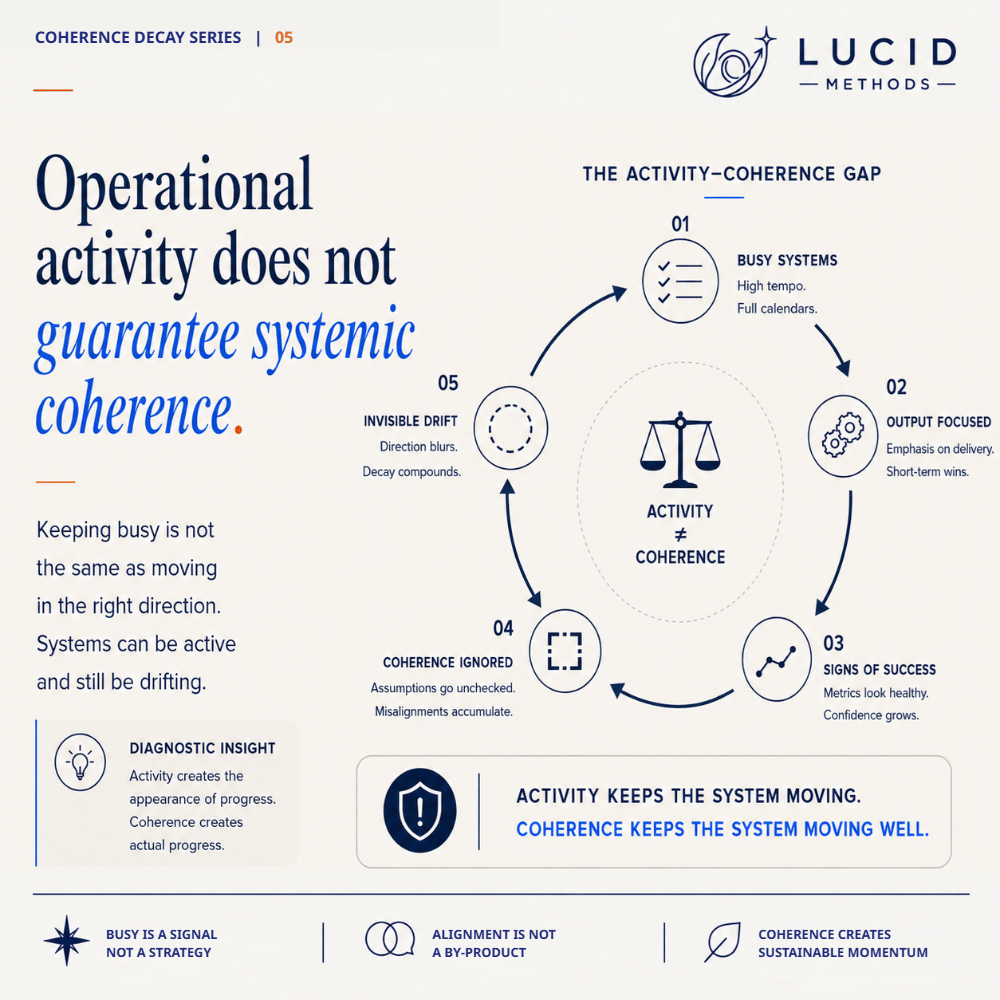
Activity vs Coherence
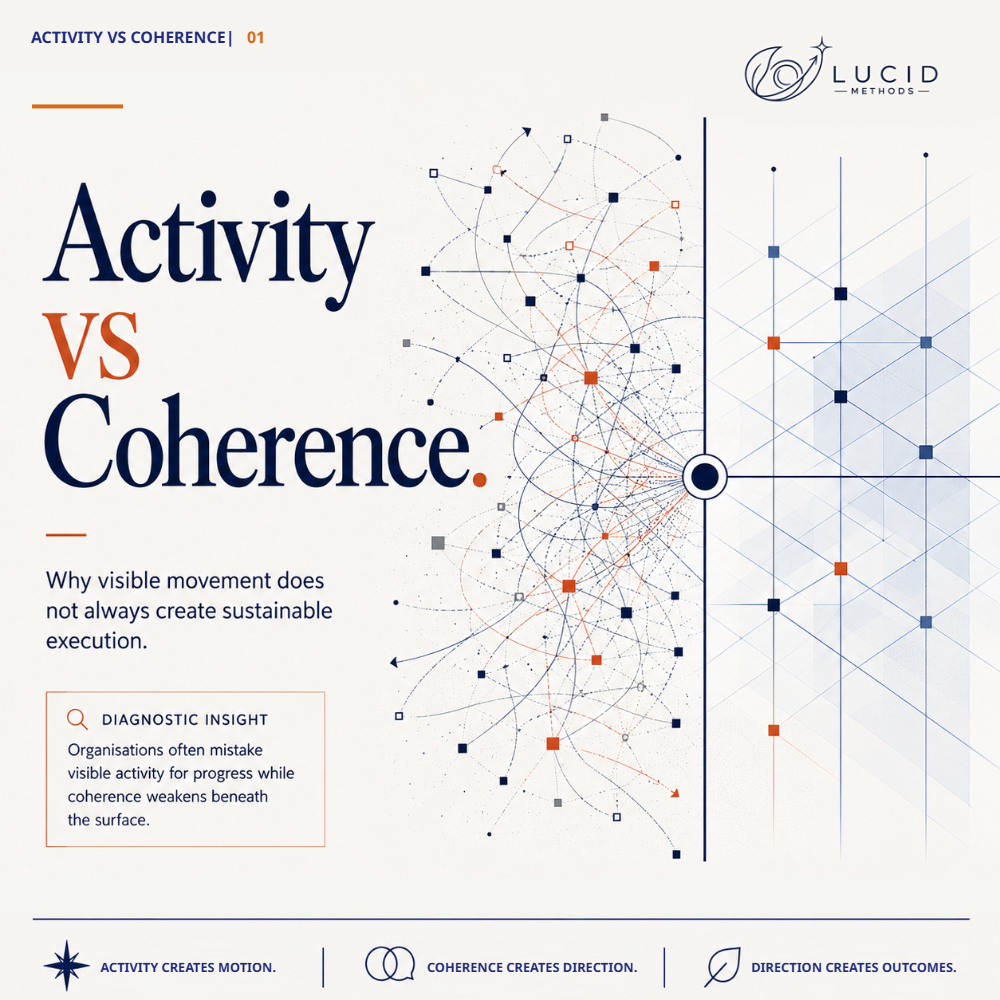
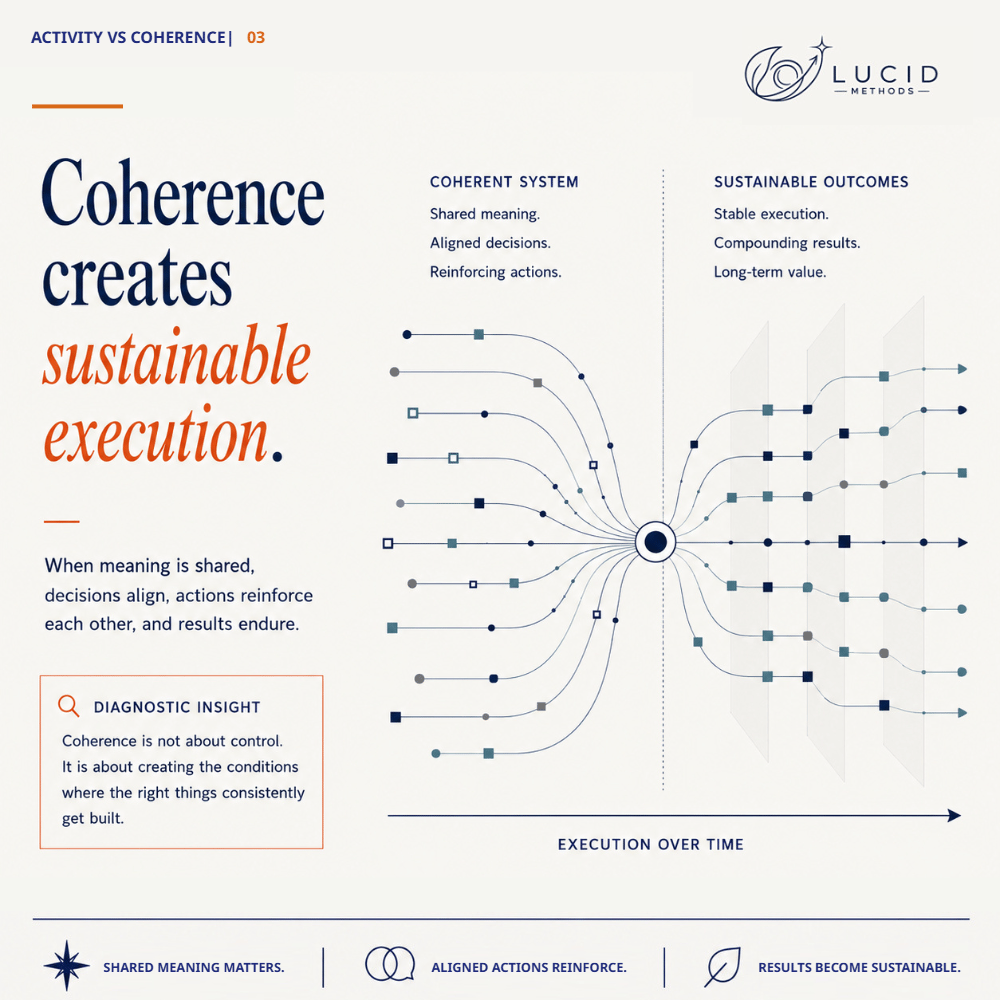
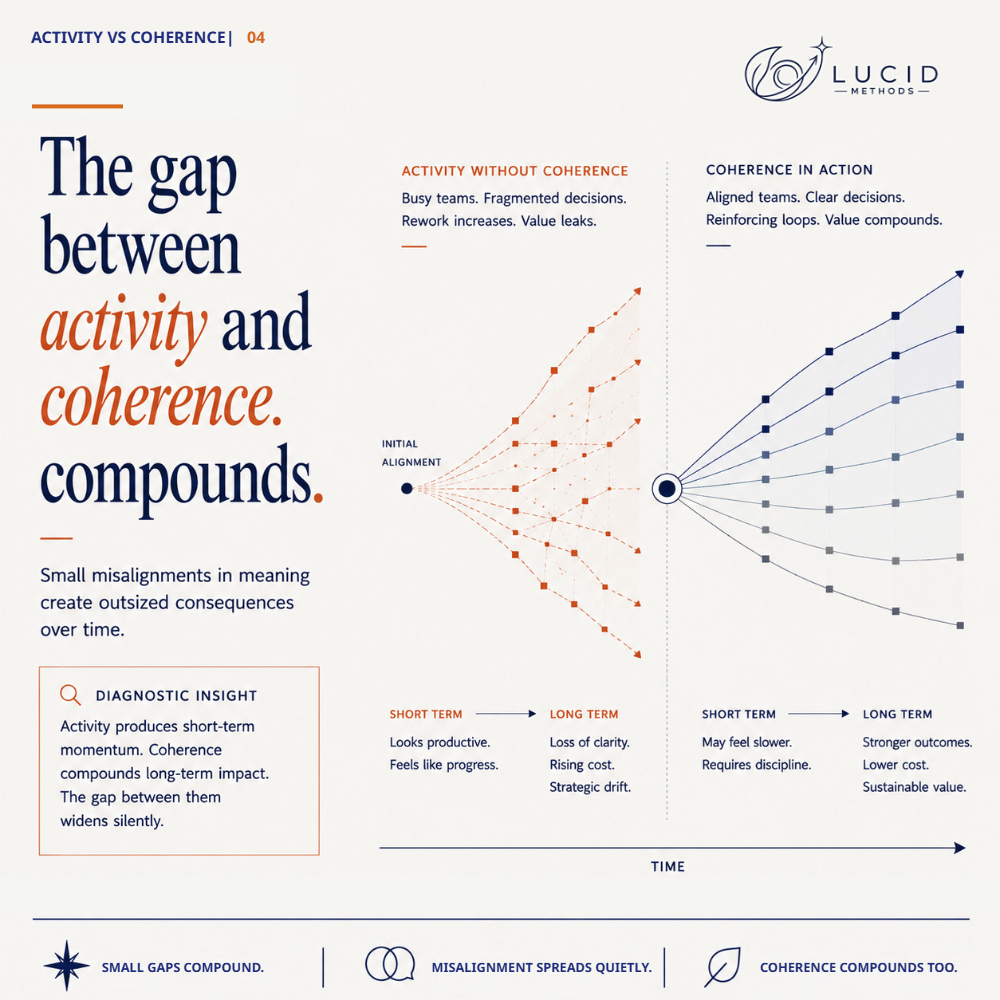
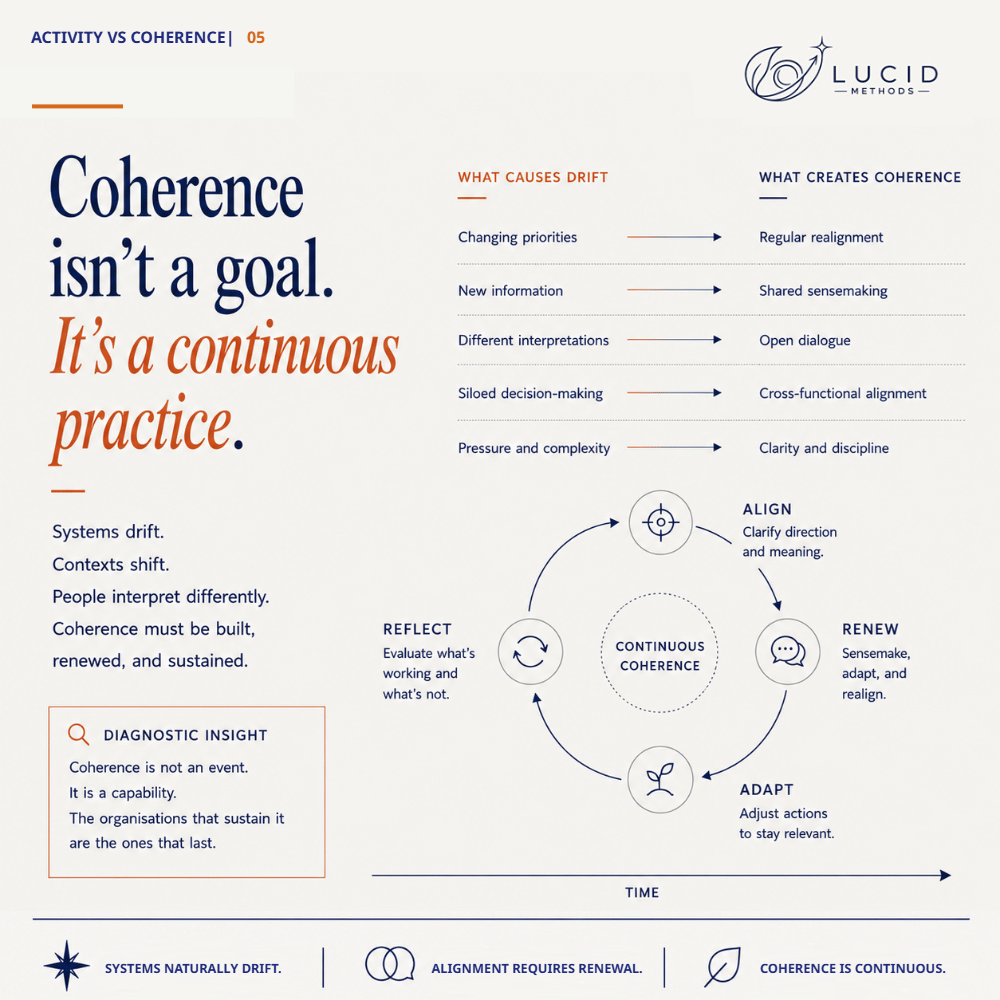
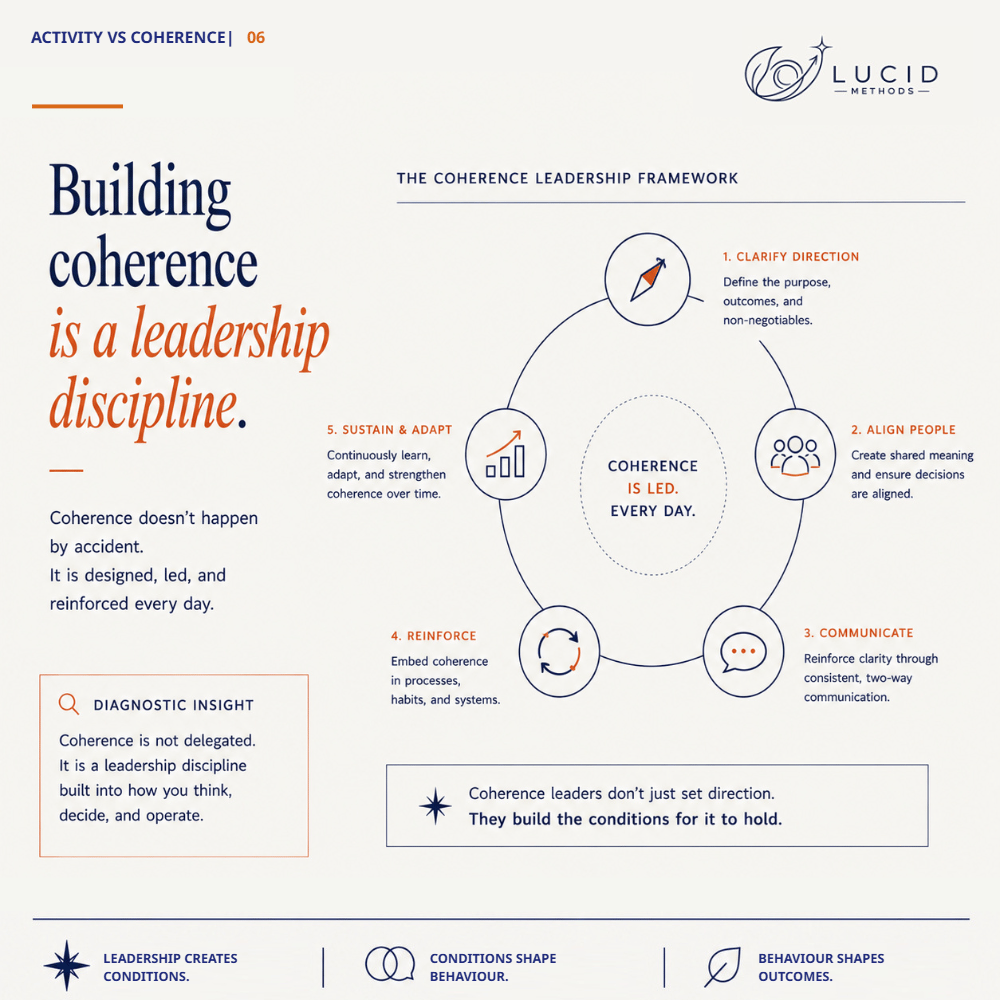
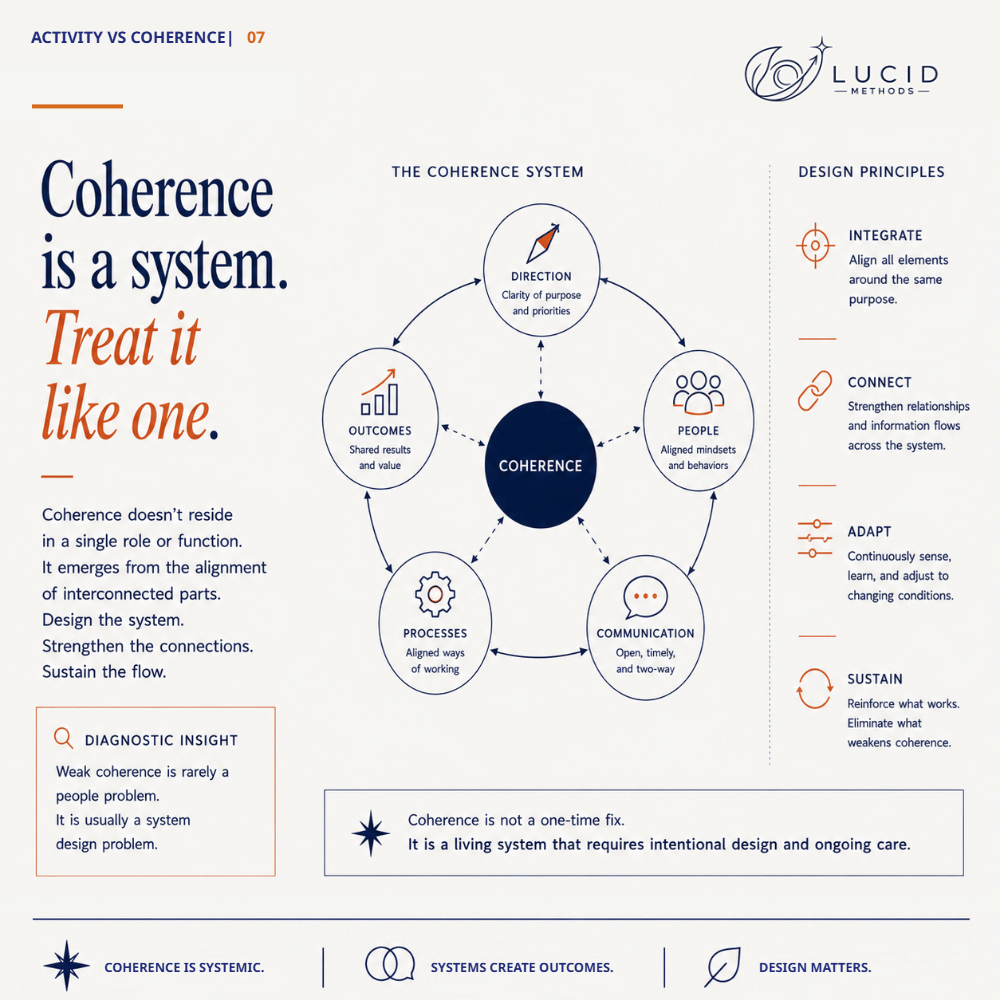
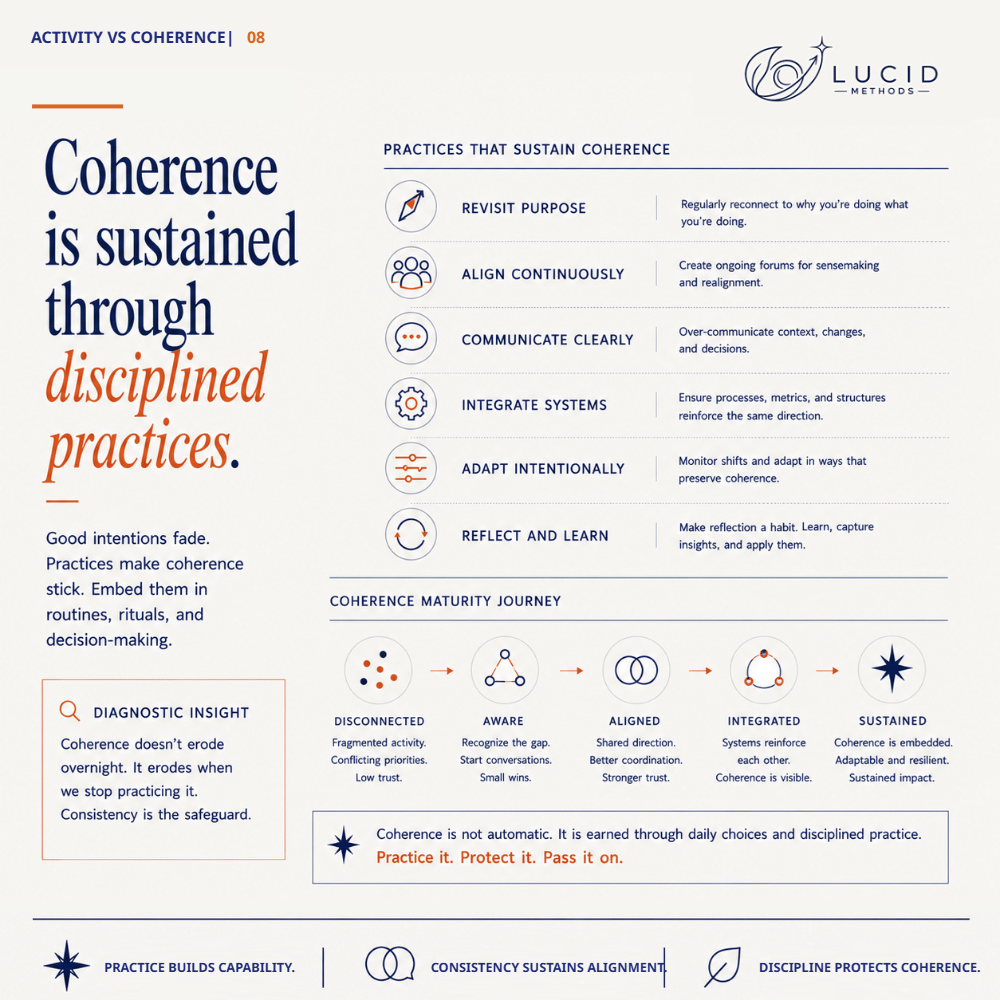
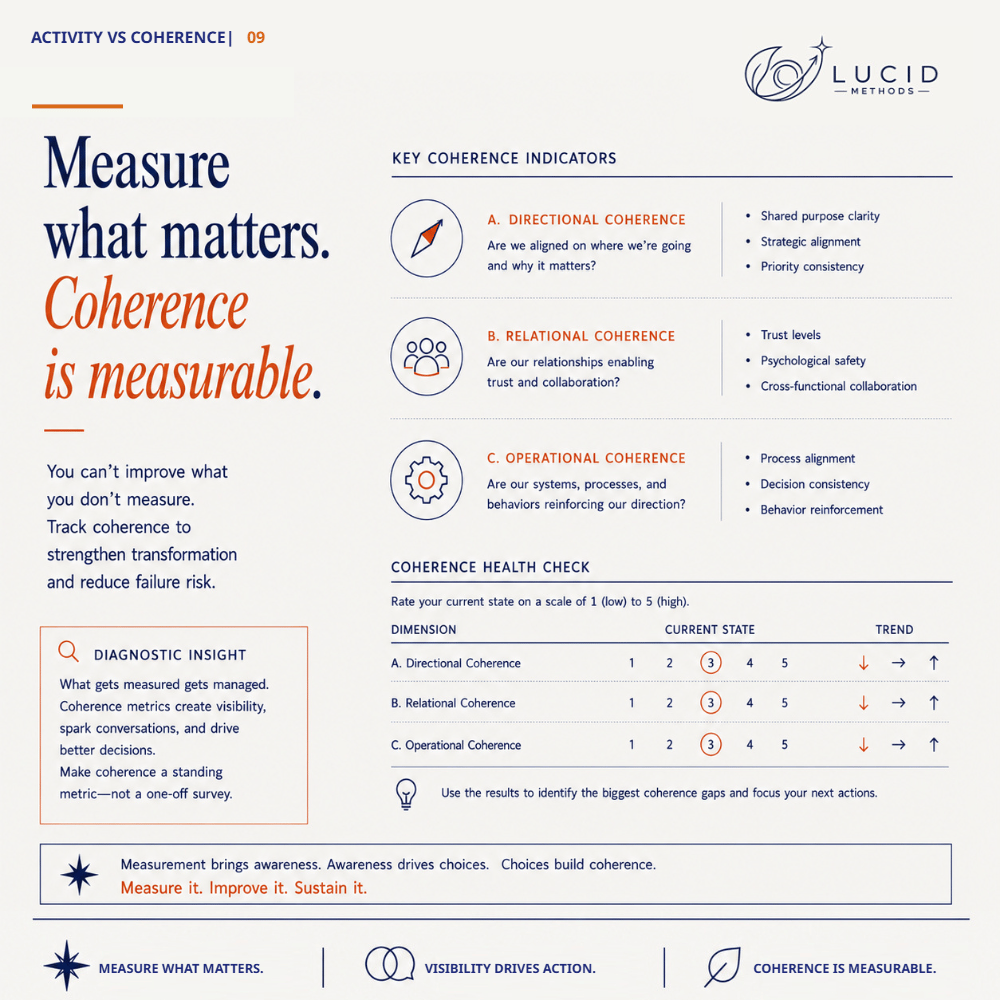
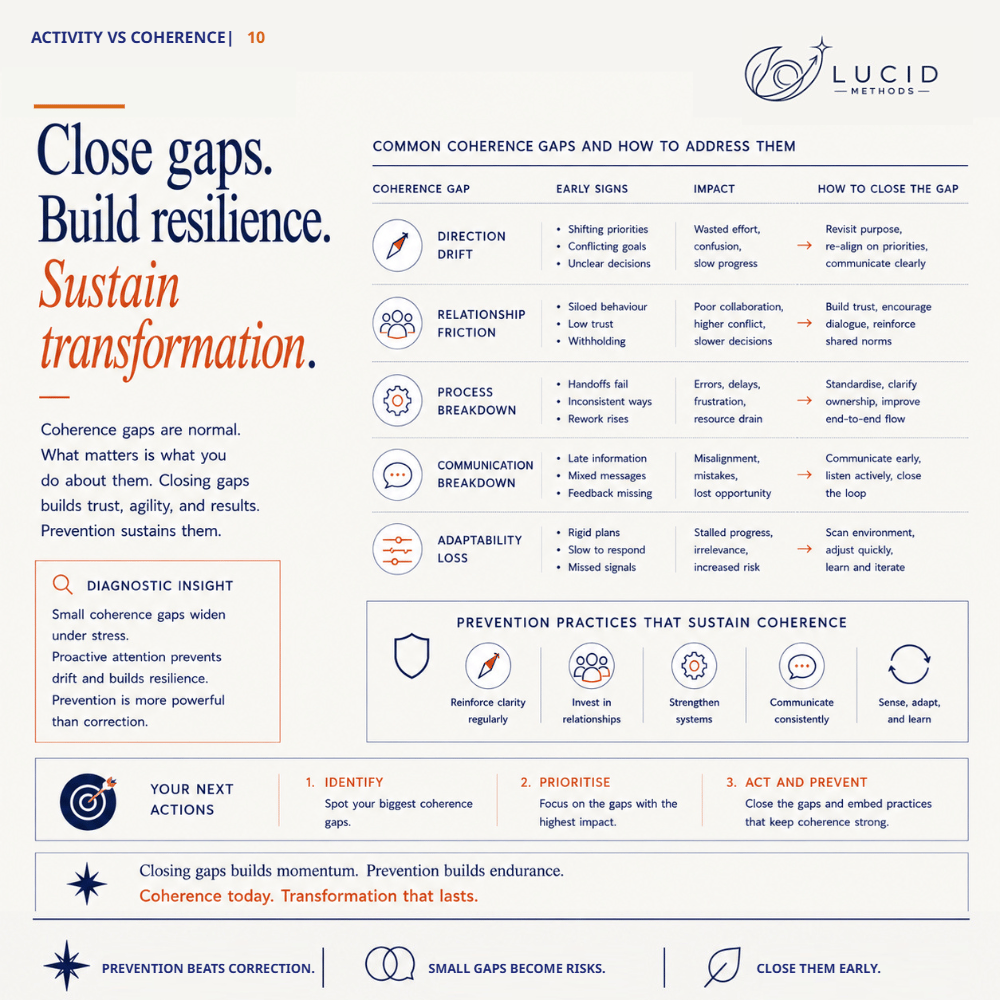
Many organisations do not fail because people are inactive.
They fail because execution slowly loses coherence beneath visible activity.
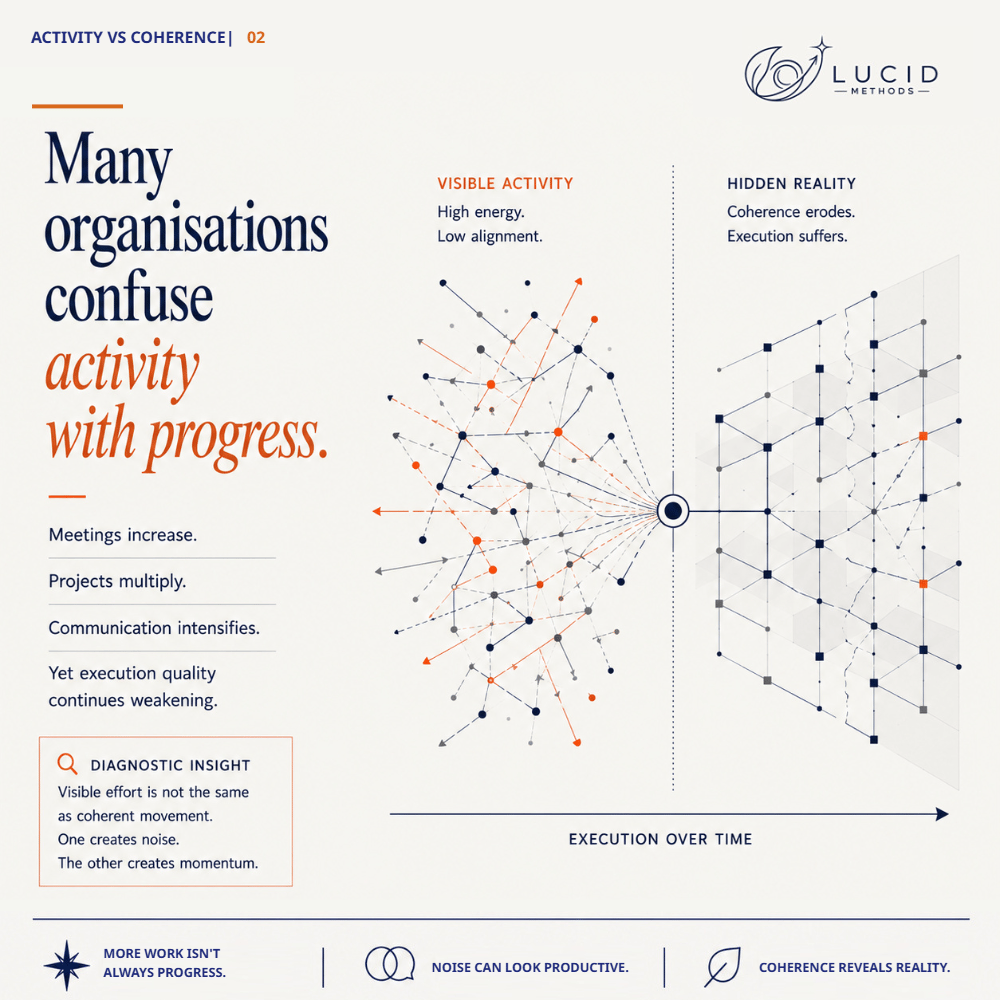
Meetings increase.
Projects multiply.
Communication intensifies.
Yet priorities begin competing.
Interpretations diverge.
Systems reinforce different behaviours.
Coordination becomes heavier.
Friction quietly accumulates.
From the surface, the organisation still appears highly active.
But activity alone does not create sustainable transformation.
Coherence does.
Coherence is the degree to which:
- meaning remains shared
- decisions reinforce each other
- systems align toward the same direction
- execution compounds instead of conflicts
This is why some organisations remain resilient under pressure while others slowly fragment despite enormous effort.
Transformation rarely breaks suddenly.
More often, it drifts gradually through accumulated misalignment beneath visible motion.
The strongest organisations do not optimise for activity alone.
They continuously reinforce coherence.
Interpretation Drift
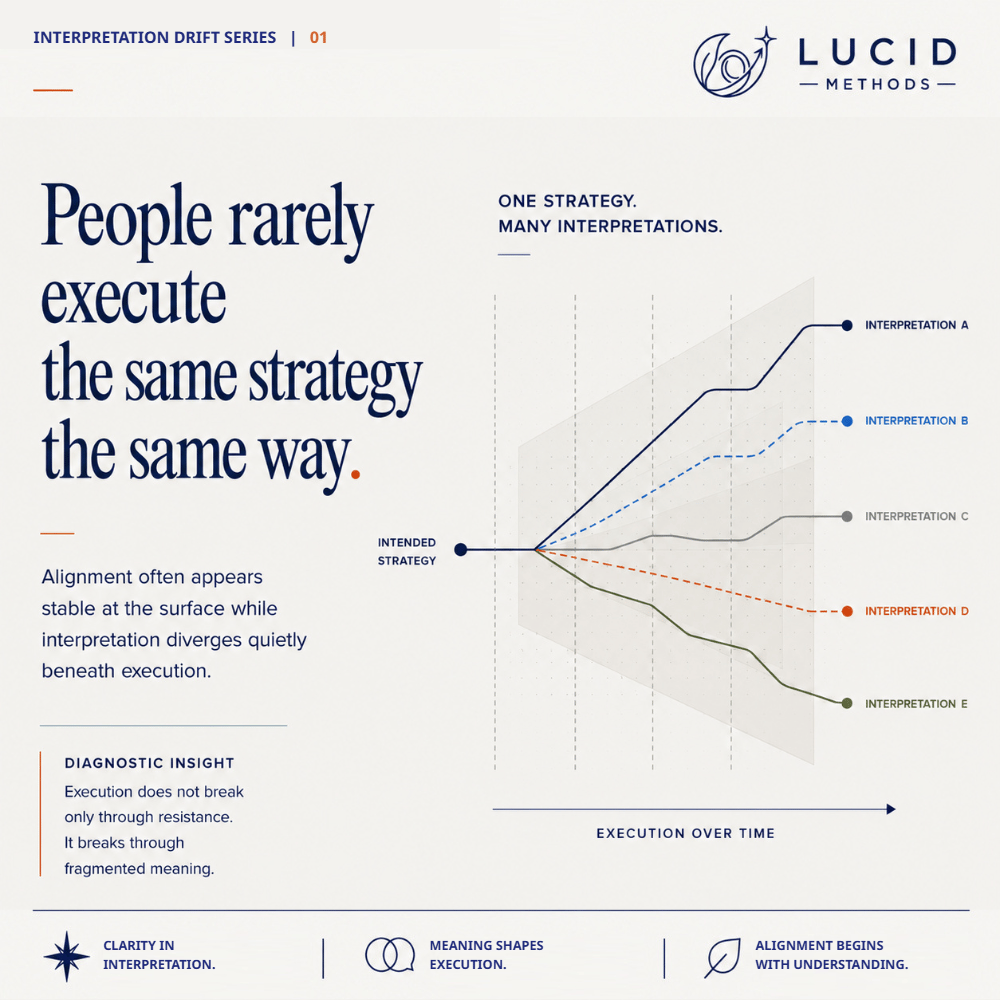
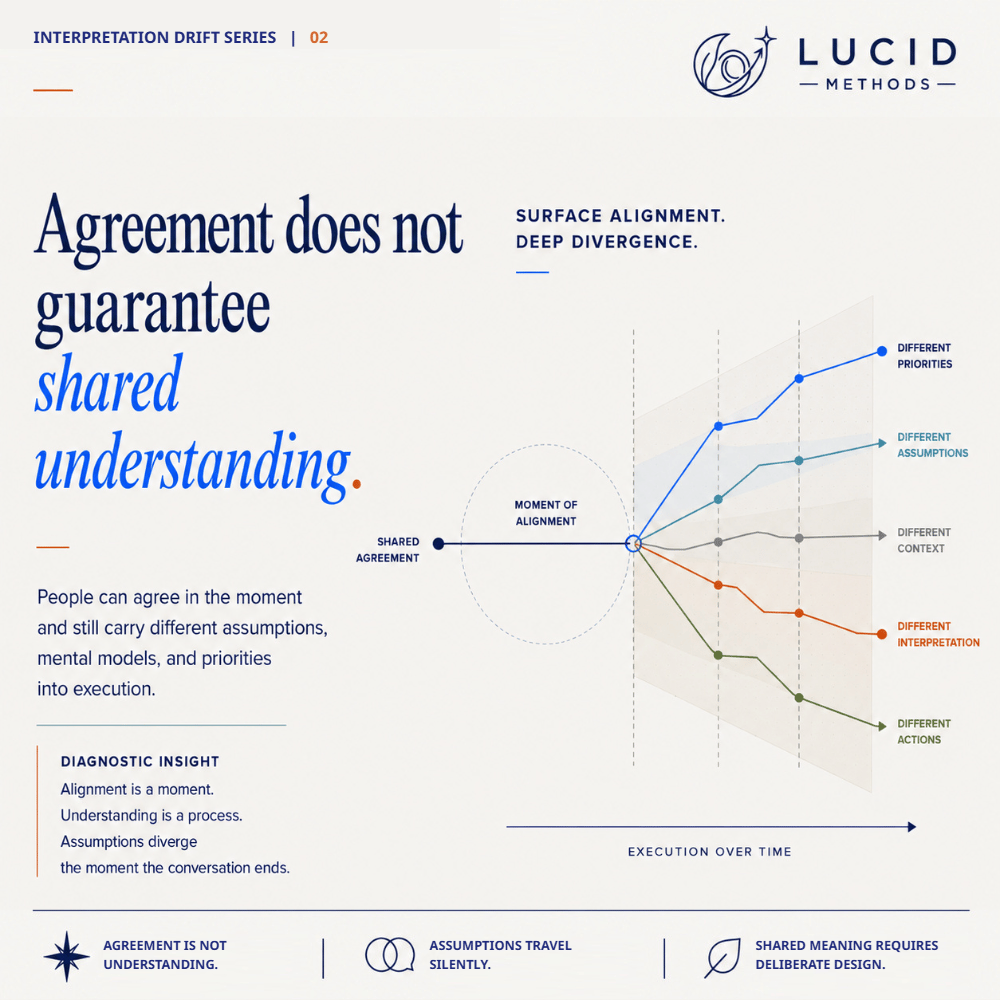
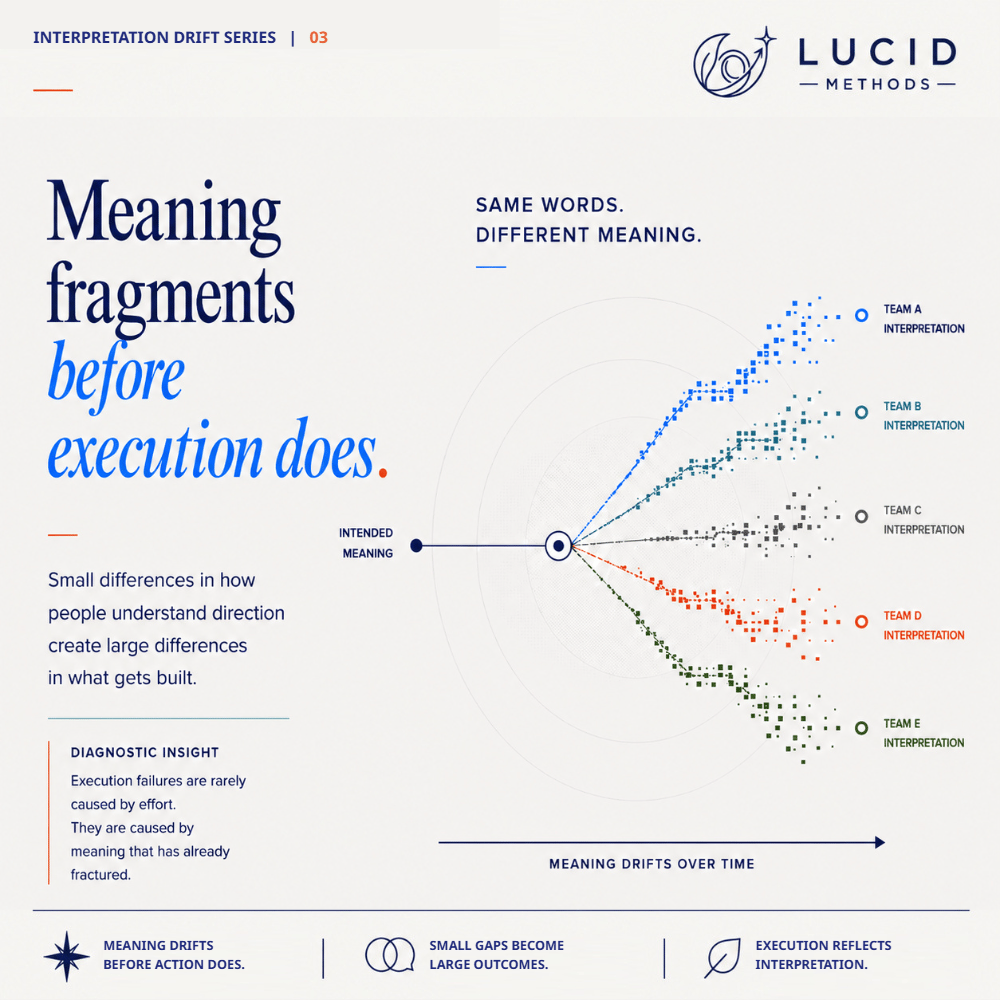
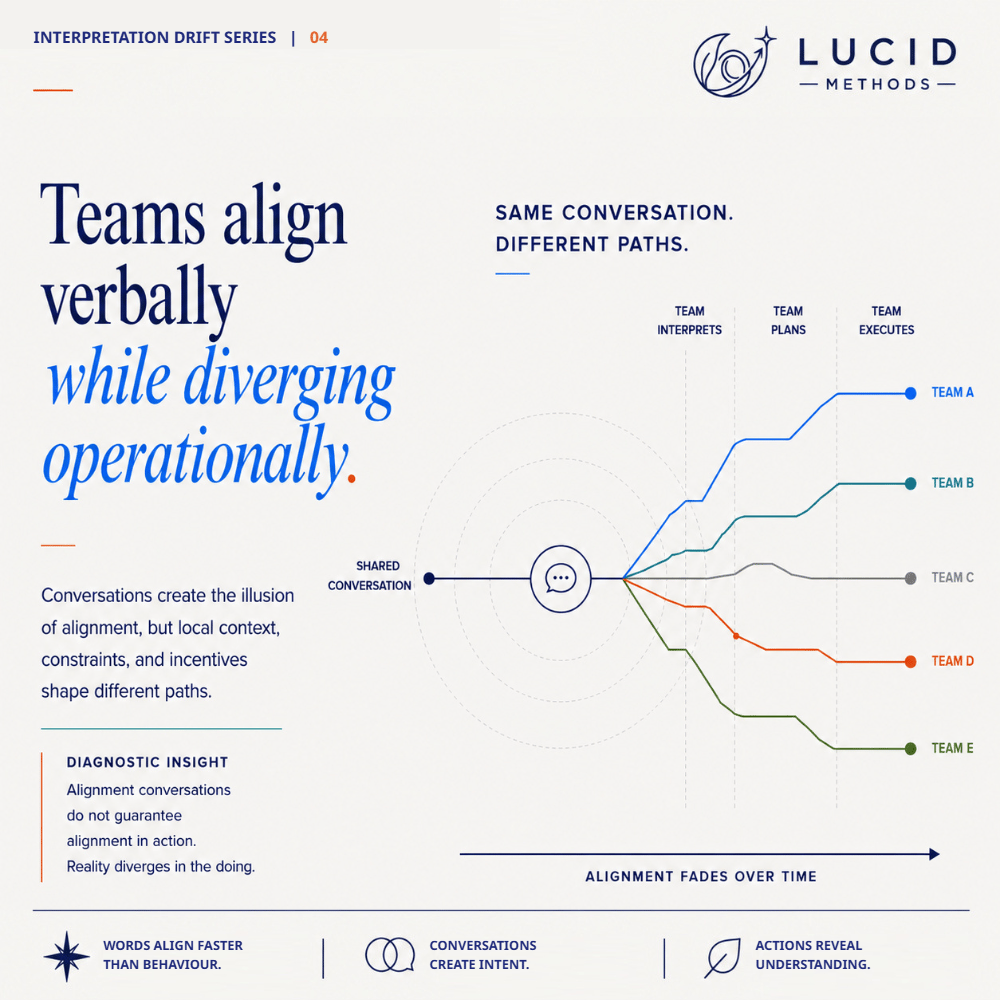
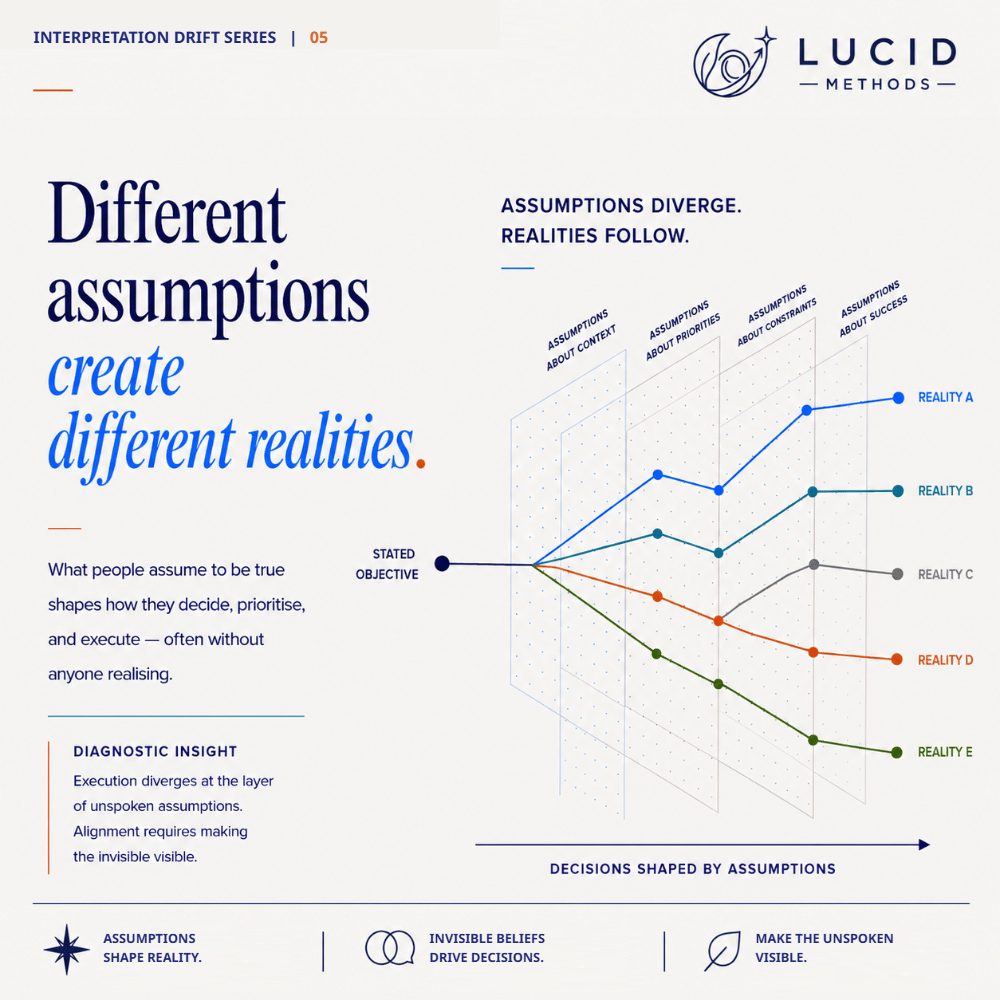
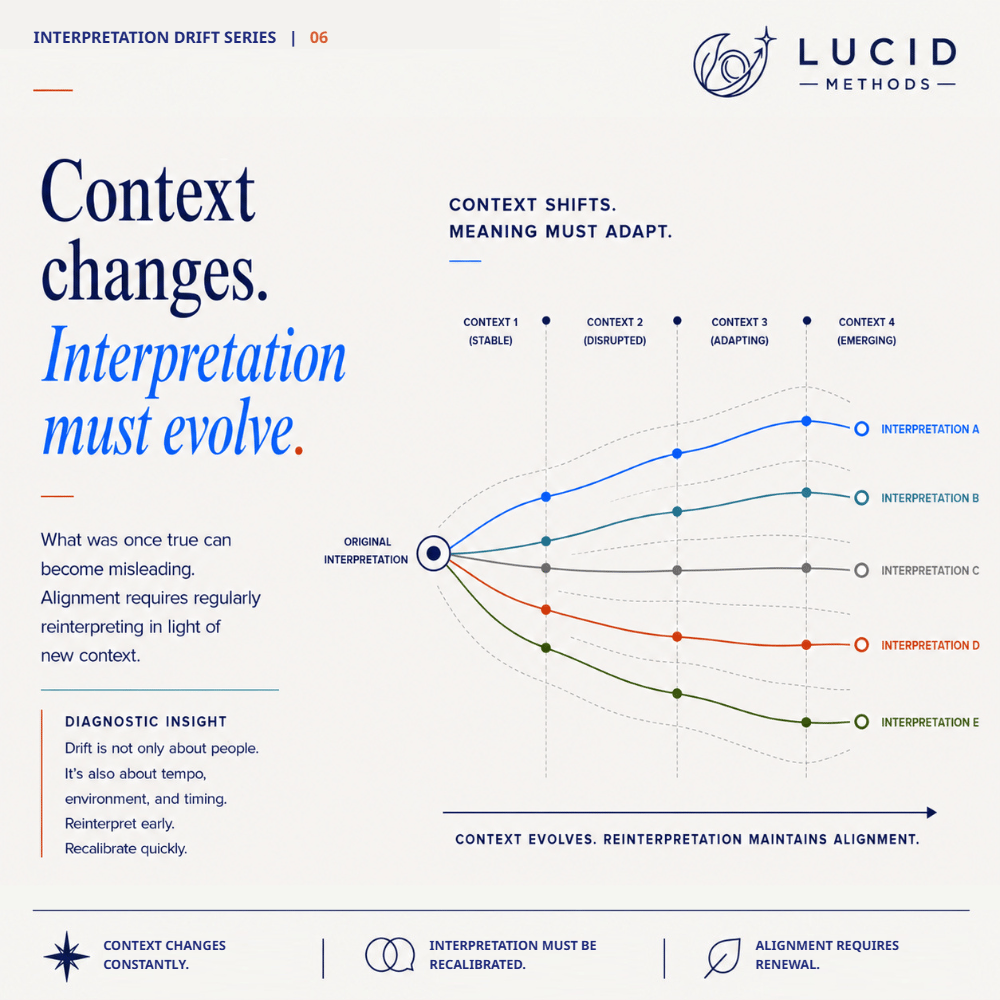
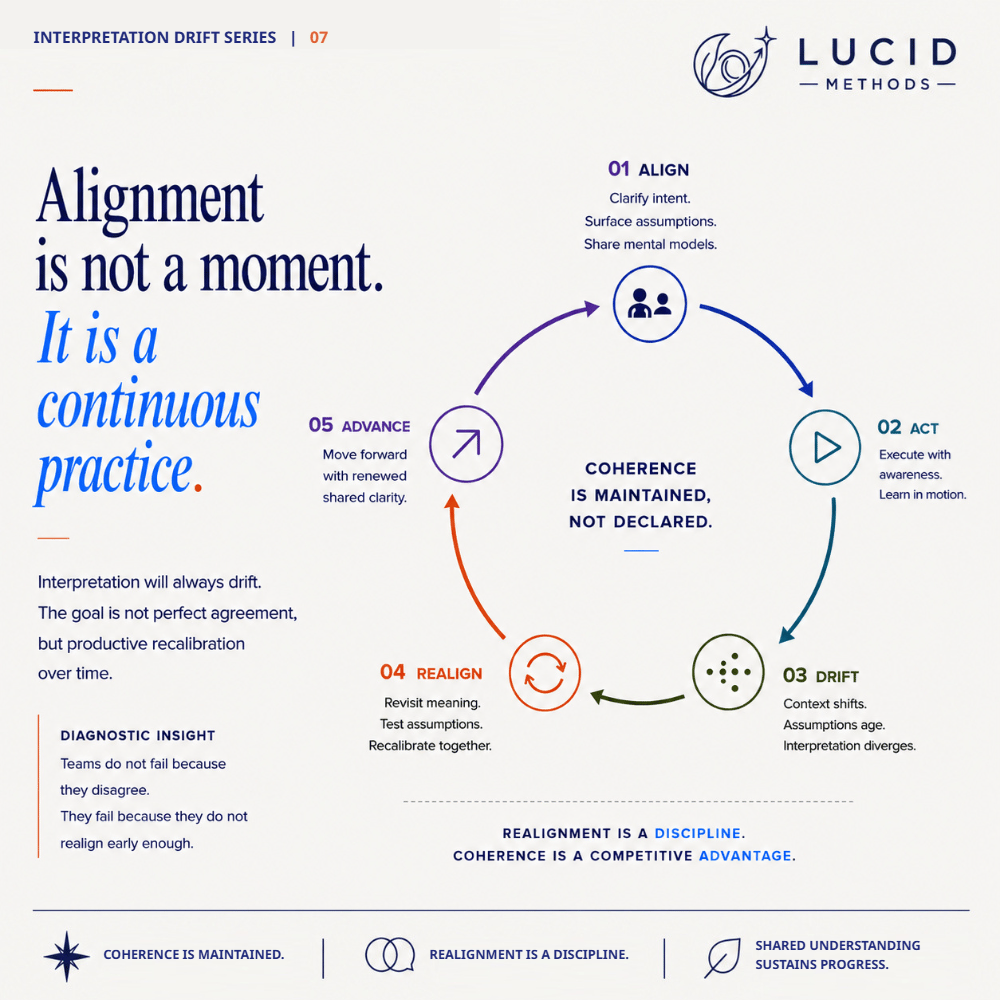
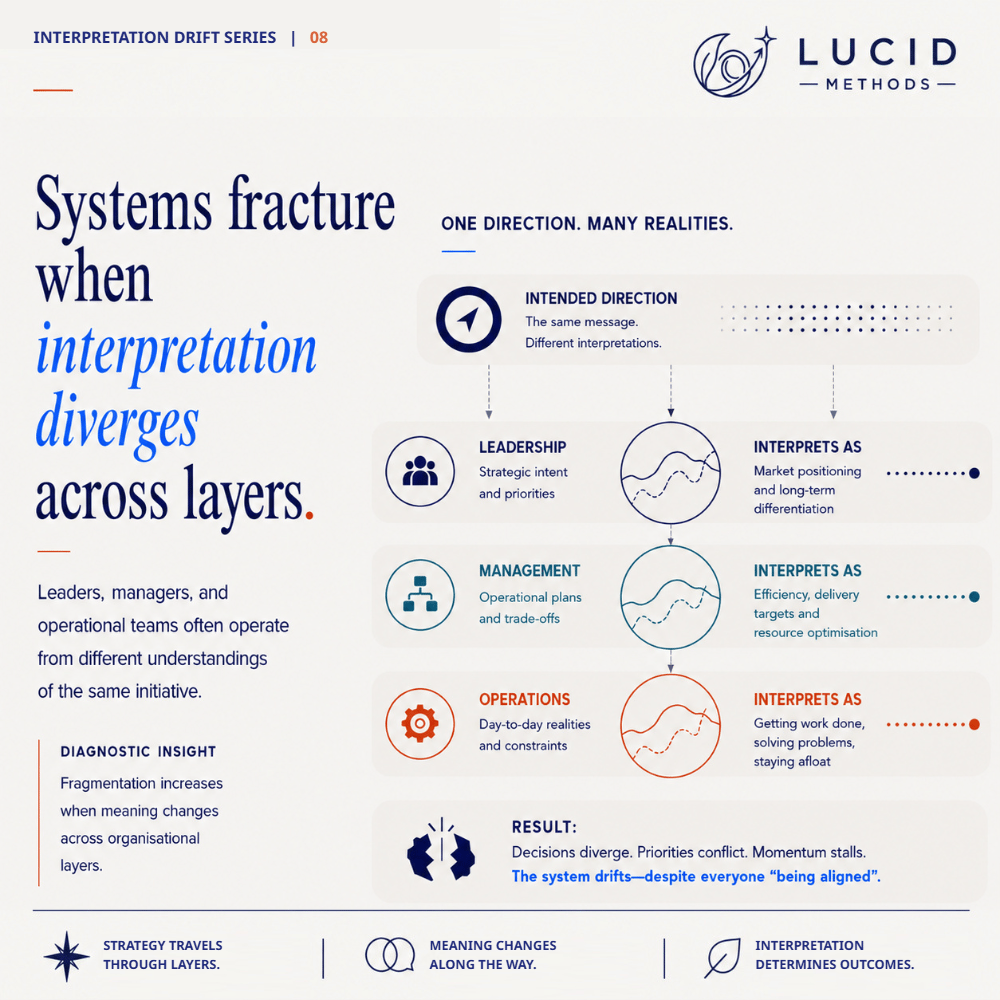
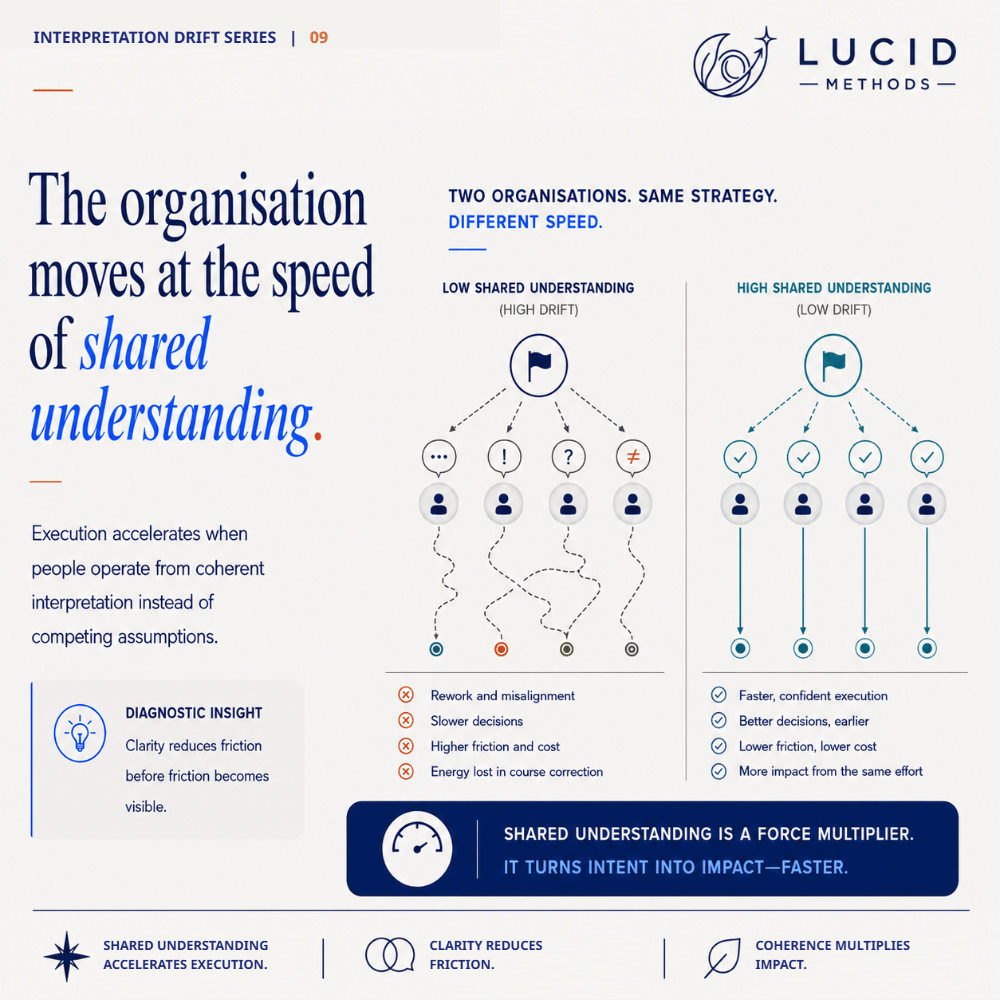
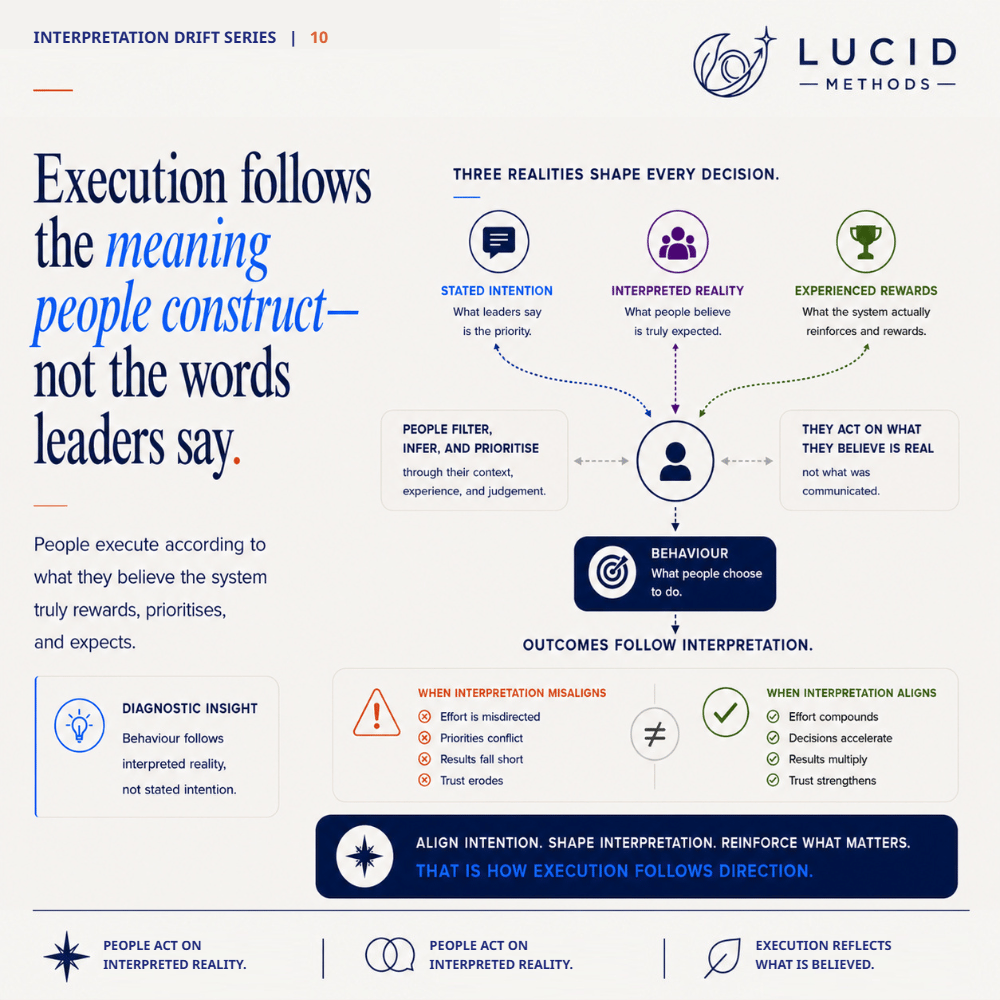
They begin with interpretation drift.
A strategy may sound aligned in the meeting room, but the moment teams return to their own contexts, assumptions begin to diverge quietly.
Different priorities.
Different mental models.
Different definitions of success.
Over time, the same initiative fragments into multiple operational realities — while everyone still believes they are “aligned”.
This is why organisations can appear busy, coordinated, and committed… yet still experience friction, rework, slow decisions, conflicting priorities, and stalled transformation.
Execution does not only follow instruction.
It follows interpretation.
The deeper challenge is not simply communicating direction clearly.
It is maintaining shared understanding as context changes, assumptions evolve, and reality shifts over time.
Alignment is not a one-time event.
It is a continuous practice of clarification, recalibration, and coherence-building.
Most fragmentation begins long before failure becomes visible.
The Architecture of Coherence
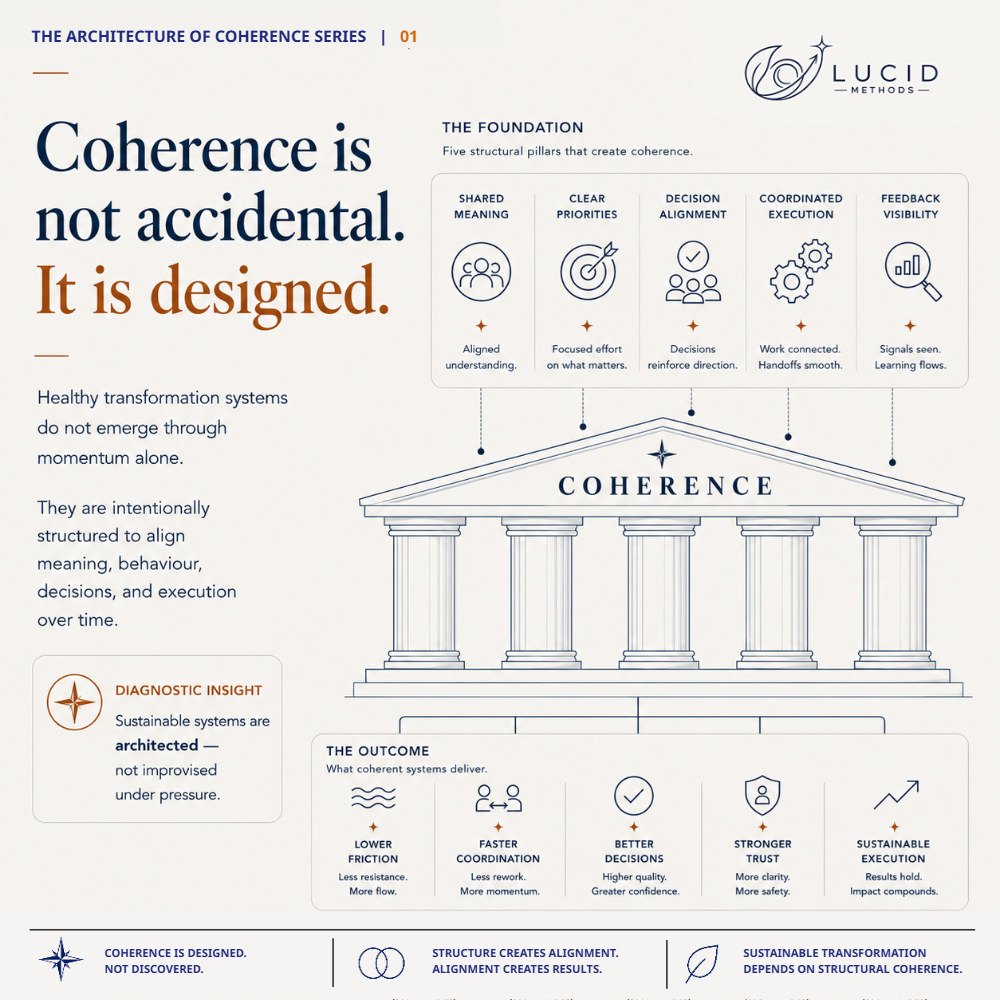
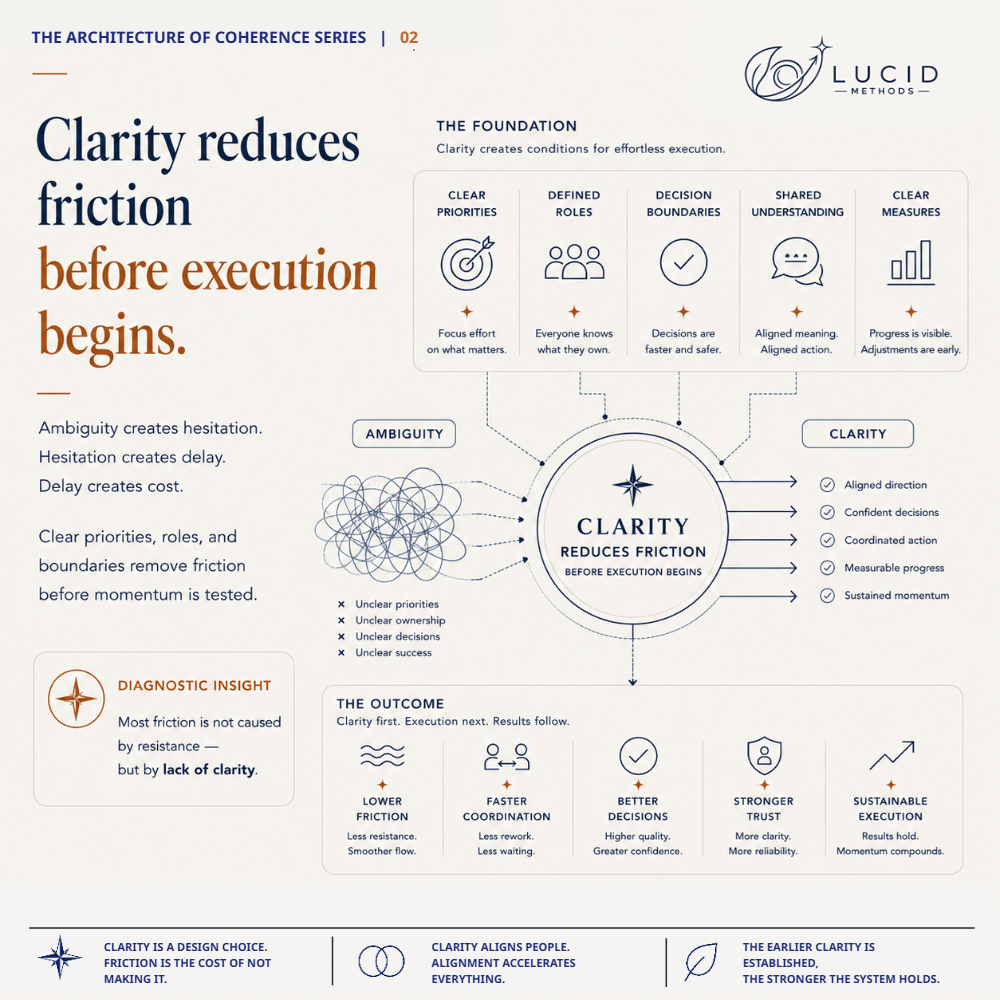
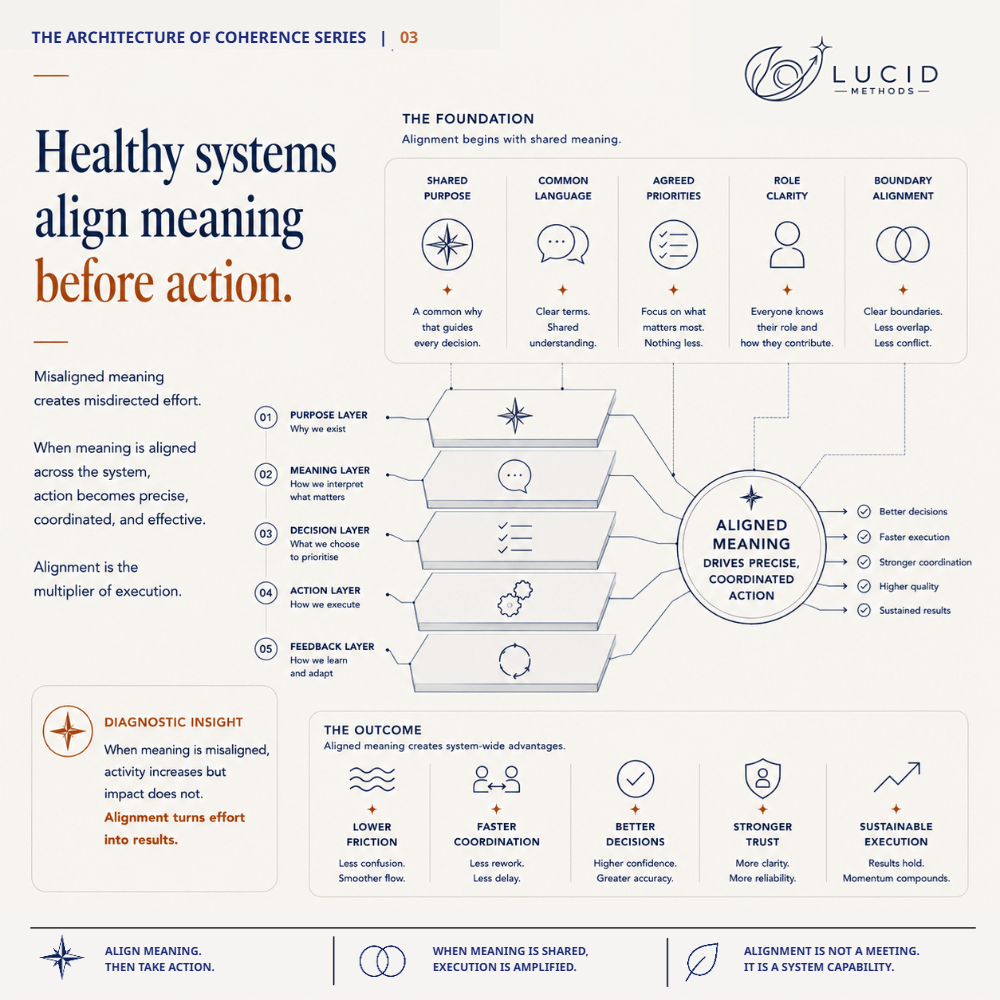
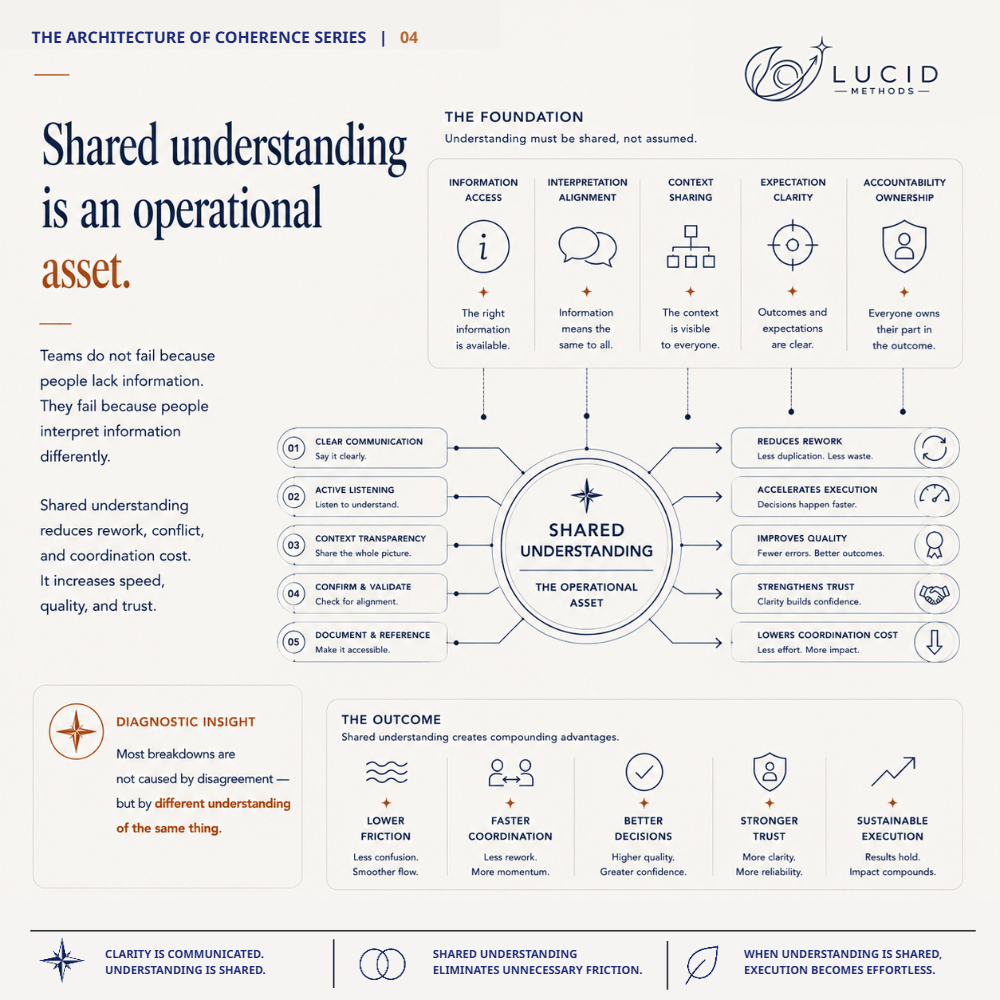
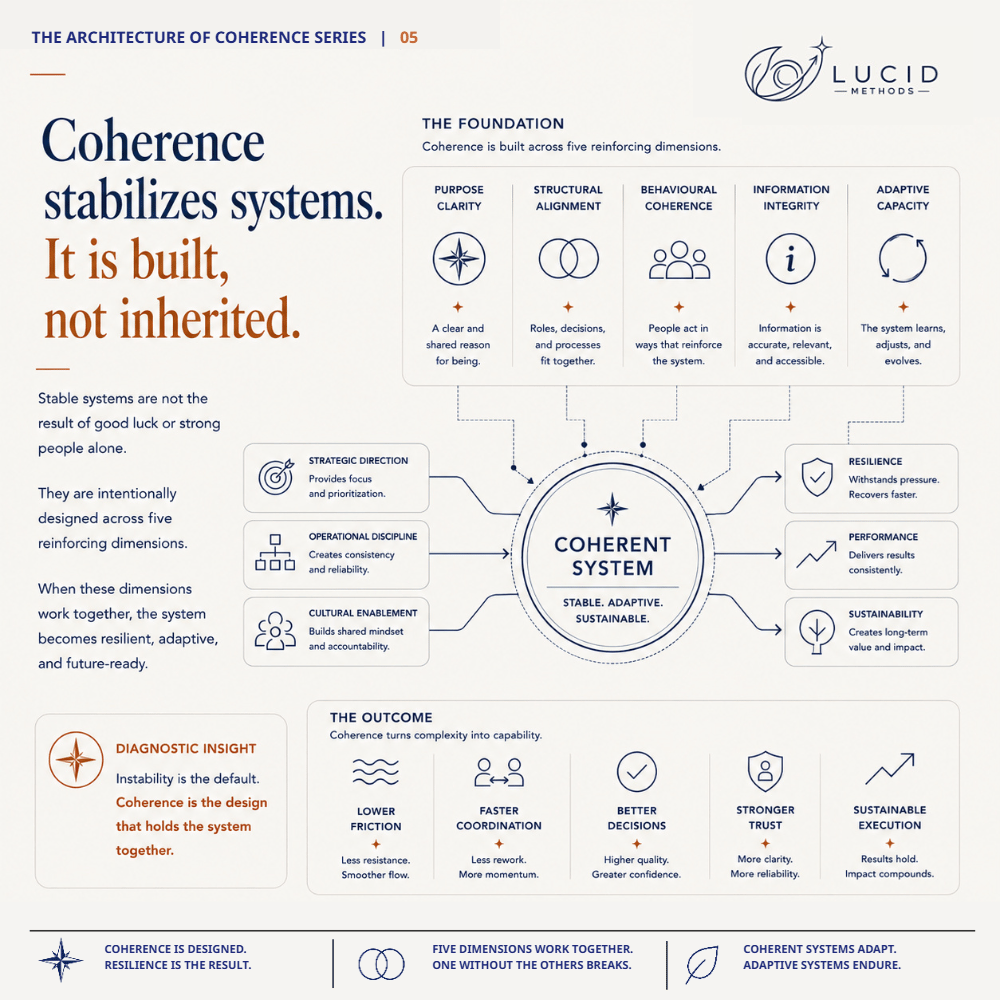
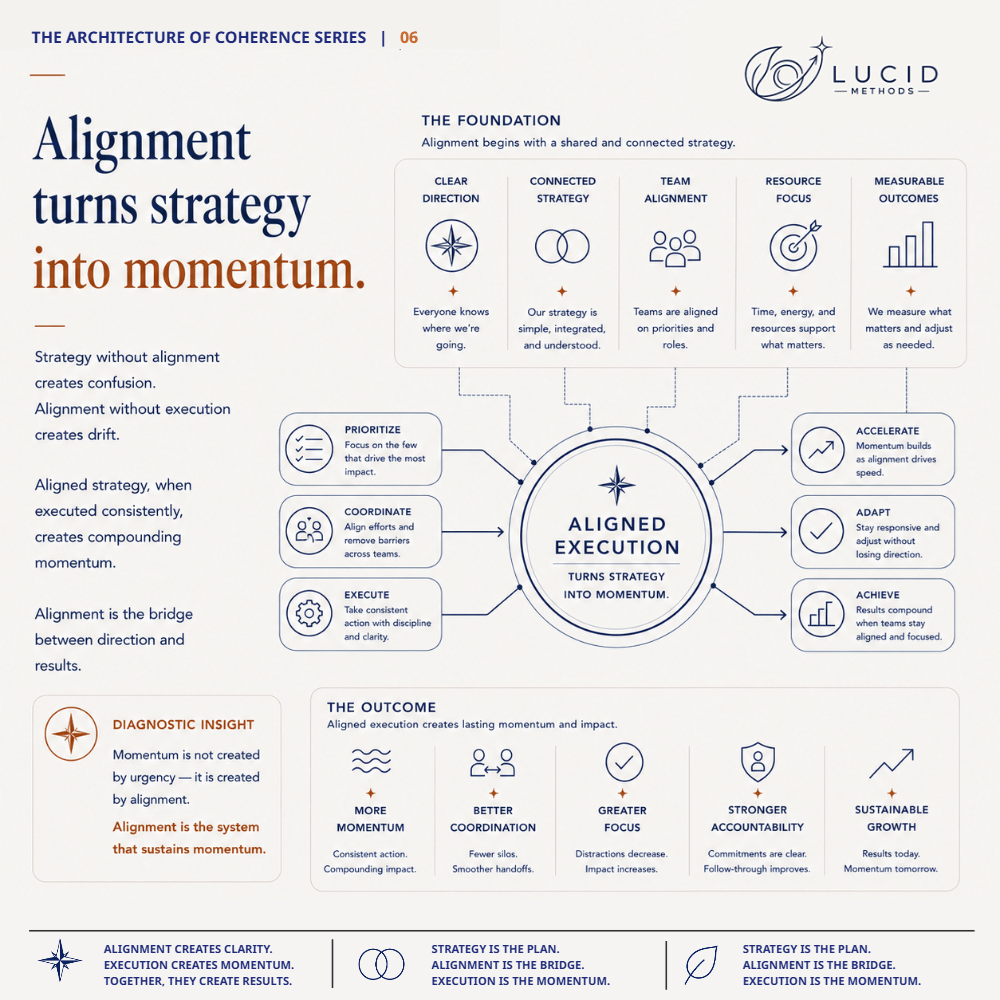
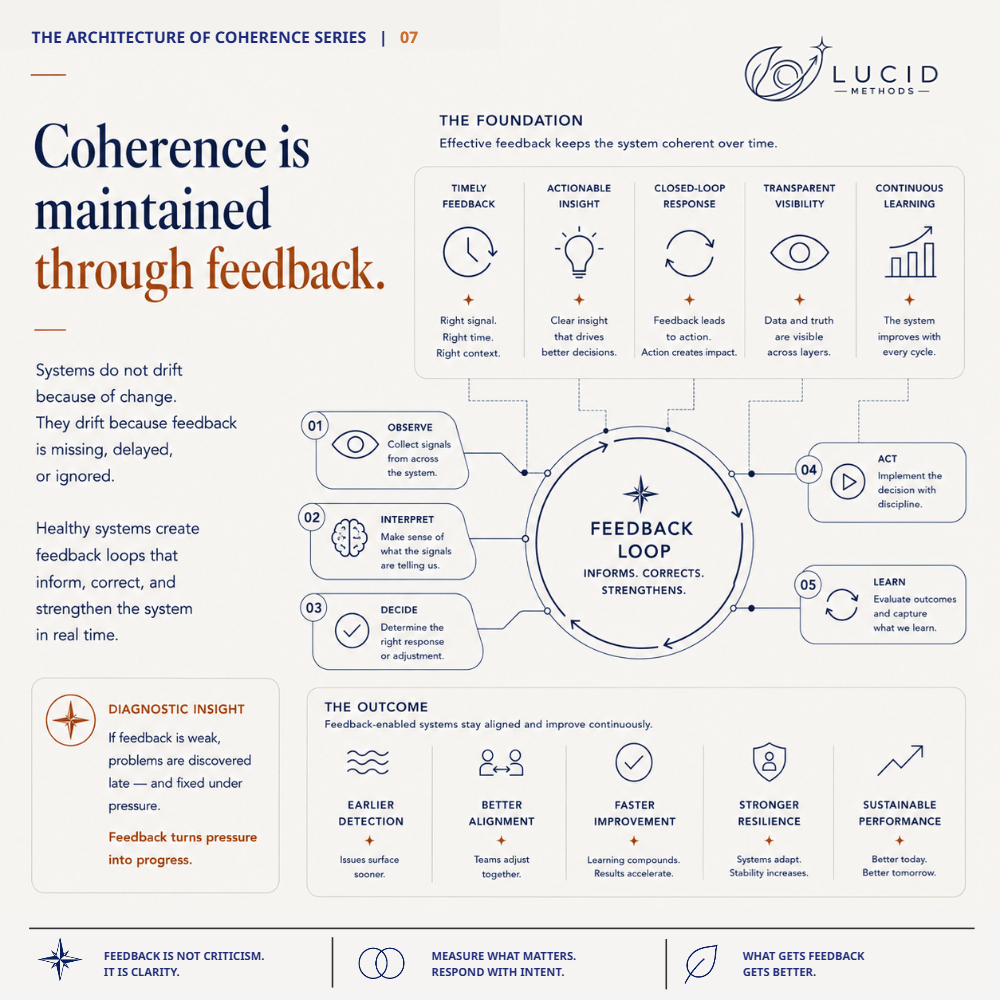
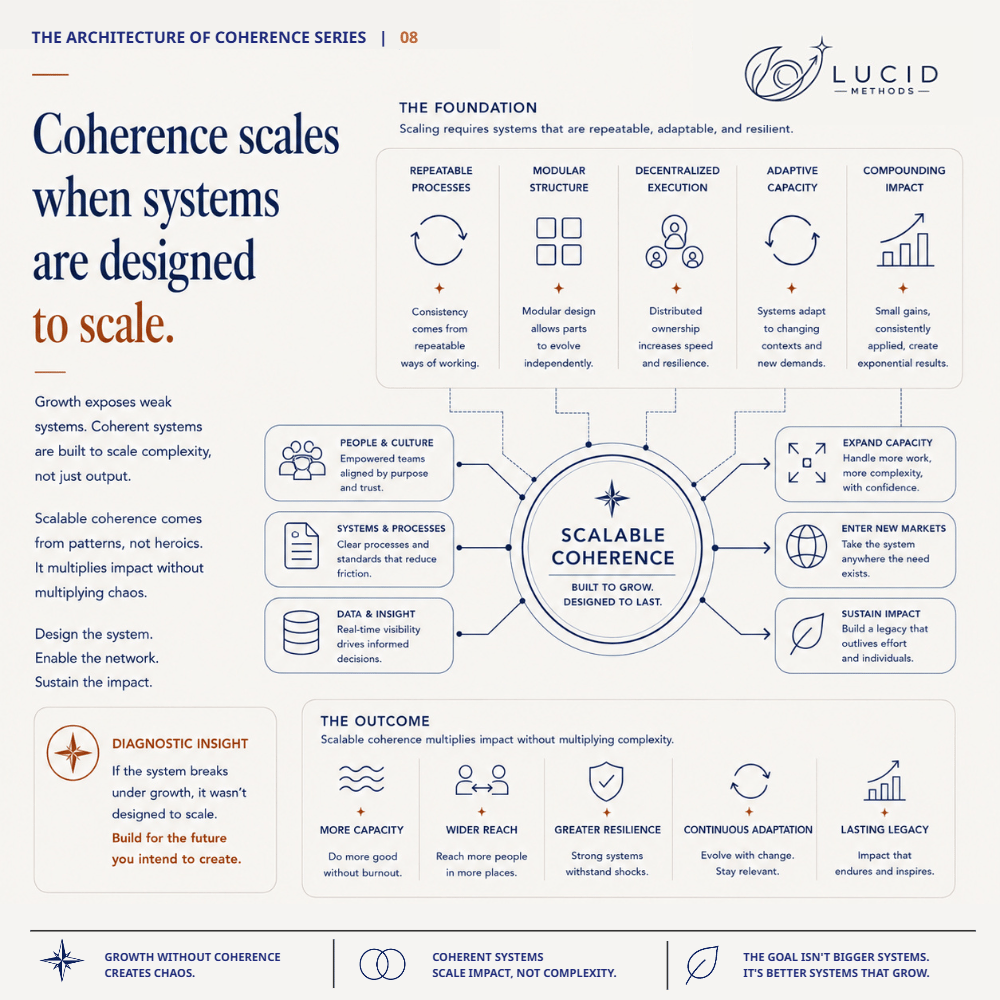
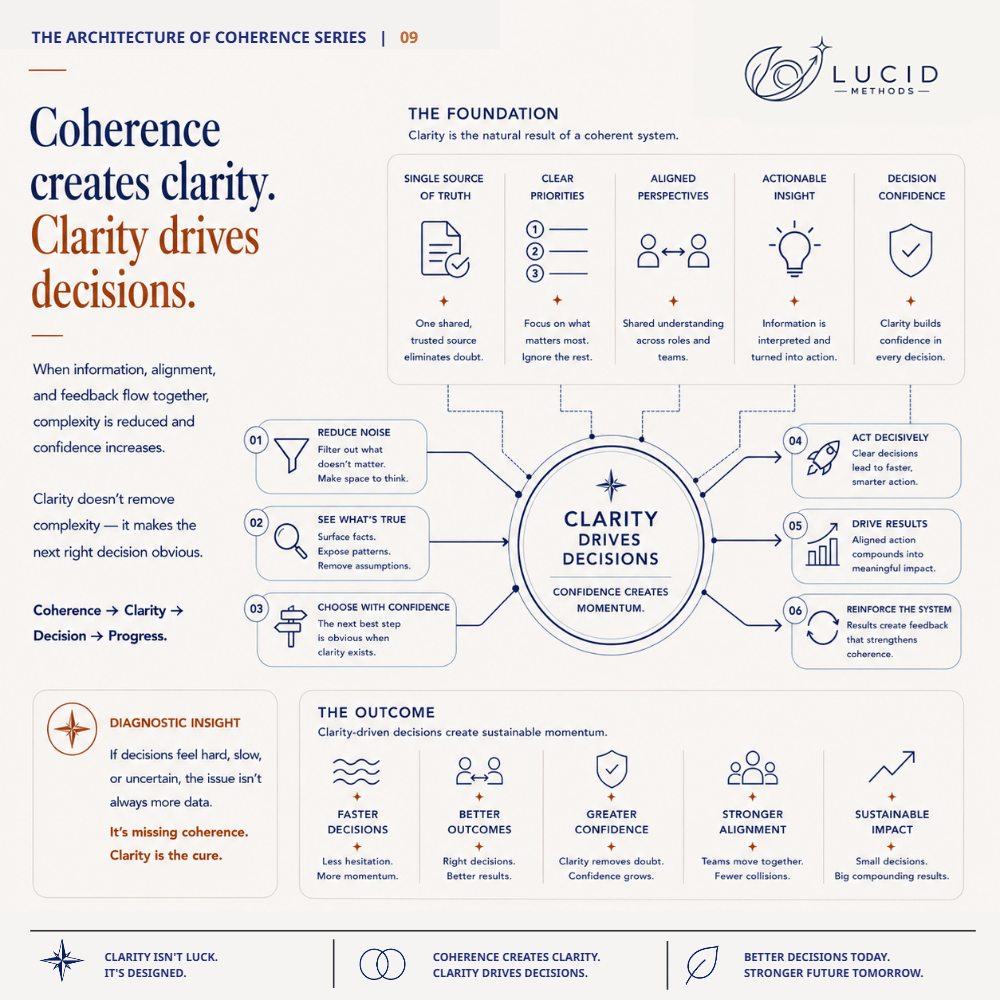
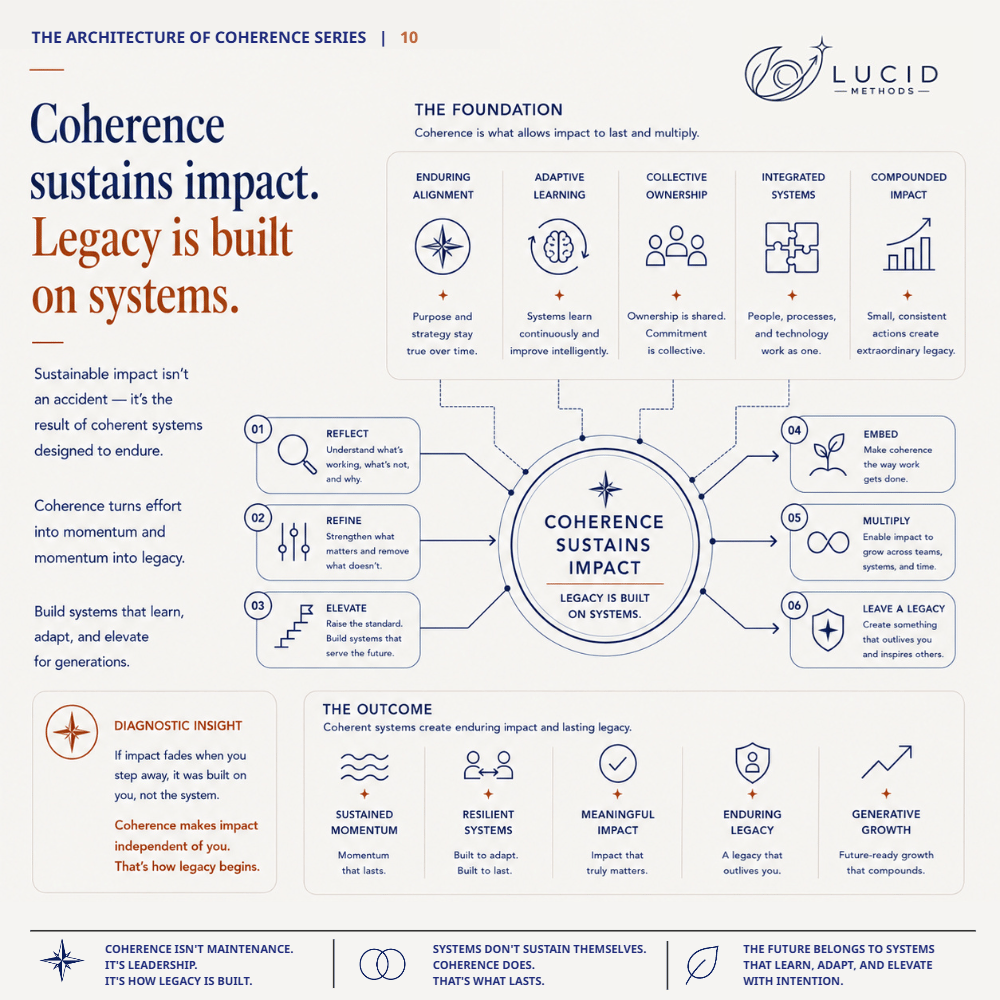
Most transformation efforts do not fail because people are unwilling to work.
They fail because execution happens without structural coherence.
Different teams interpret priorities differently.
Decisions become inconsistent.
Coordination slows.
Feedback arrives too late.
Momentum fragments quietly beneath visible activity.
This series explores a simple but often overlooked reality:
Healthy systems are designed for coherence.
Coherence is not culture alone.
It is not communication alone.
It is not alignment meetings, slogans, or momentum.
It is the deliberate architecture that connects:
• shared meaning
• clear priorities
• aligned decisions
• coordinated execution
• feedback visibility
• sustainable adaptation
When these structures hold together, clarity improves.
Friction reduces.
Execution accelerates.
Trust strengthens.
Results compound.
Sustainable transformation is rarely accidental.
It is designed.